Decades after his murder, Roger Cumberland’s home in Duhok is being reopened as a symbol of coexistence.
Perched on a hill overlooking the historic heart of Duhok, a house of stone stands as a quiet witness to a chapter of the city’s past. To some, it is Qesra Kembellane, or Cumberland House; to others, it is the oldest house in Duhok, a landmark whose half-meter-thick walls hold the echoes of a life both visionary and tragically cut short.
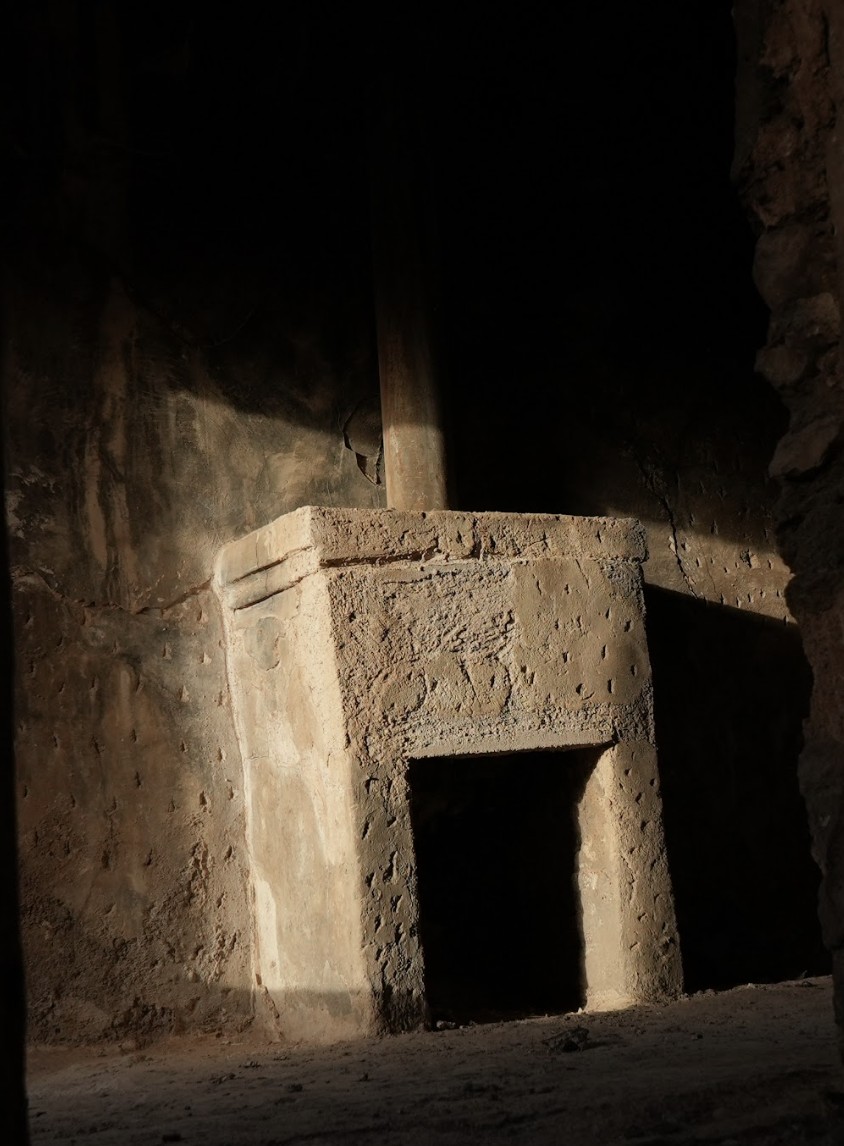
Built in 1929, the structure was an architectural conversation between East and West – a stark departure from the traditional mud-brick homes of its time – and it was designed not for a season, but for a lifetime. Its sturdy form was a bulwark against Duhok’s harsh winters, with a grand fireplace spreading warmth through its rooms.
Within its walls, the Cumberland family hosted community gatherings and on one occasion even projected a ‘lantern show’ – something like a pre-digital PowerPoint presentation – for their neighbors. It was from here that Roger dreamed up a revolution in pure water provision for the town: piping spring water uphill for their home but also for a quarter of the town, including the main mosque. On its two-acre plot, Duhok’s first tennis court was built. In 1933, its yard became a sanctuary for widows and orphans fleeing the Simele massacre.
Rugged and independent
The man behind the house was Roger Cumberland, an American Protestant missionary who arrived in Duhok in 1923 with a mission to live among and understand the Kurdish people and to help them develop their agriculture. At that time, the Kurds were poorly understood and were often maligned as a nation of mountain dwellers. The bold ambition of this Californian farmer’s son was to serve as a Christian missionary in the region and to establish Kurdish-speaking churches.
Writing in 1926 for a missionary journal, Cumberland offered a portrait of the Kurds that sought to dismantle the prevailing Western caricature of the ‘violent mountain raider,’ arguing it was a fiction born of fear and mystery. He found instead a people who were hospitable, generous, and defined by a noble simplicity.
Cumberland described them as deeply connected to their land – independent, self-sufficient mountain dwellers. “The typical Kurd is not a city man,” he explained, “but a dweller in stone-built villages snugly nestled in the rugged ravines.”
A native of California, he added with admiration: “The scenery in these mountains is magnificent. I, who come from California, admit it!”
His observations extended to the Kurdish psyche. He noted that the people he lived among had no direct word for “hate.” If a Kurd felt animosity, he would simply say, “Az has zhwi nakem” (“I don’t like him”).
Cumberland saw a parallel between the Kurds and the Scots of earlier centuries – rugged, fiercely independent, and proud. He wrote of his hope that a new internal power would animate the Kurds and make them a great nation. “The notable part of the history of Kurdistan,” he wrote in a terse but telling oxymoron, “still lies in the future.”
A pacifist and a missionary
Myths about Cumberland have circulated for decades. He has been labelled a spy, a British political officer, and a military man. According to Jeremy Fowler, a British Kurdologist who has spent years researching Cumberland’s life and who lived in Duhok for 11 years, these labels are misleading.
“It’s only by delving into the archives that you can get behind all the legends and encounter the real Roger Cumberland,” Fowler says. Although a widely circulated photo shows a stern-looking Cumberland in a military uniform from World War I, Fowler notes the image is misleading. For one, he was a pacifist who only joined the army because he was conscripted, but also because “he was a real jester. His letters are peppered with jokes and funny stories.”
Fowler argues that the best descriptor for Cumberland is a mizginider – a Kurdish term for a bringer of good news. His practical contributions were immense, but he saw them as secondary. In 1932, he wrote: “I count both the clean water provision and building of the tennis court as real contributions to the life of the community, but they are not exactly what I came here for.”
He resolved to spread his faith in the region and not shrink back from his mission, even if it placed him in danger. After a few local conversions, the climate in Duhok turned hostile. The Cumberland family was boycotted, and their home was watched by the police. In May 1938, a month before his death, he wrote from a conference in Beirut, weighing his future. Faced with a plot against his life, he remained resolute:
“The promises of God are to those who endure,” he wrote. “And I’d like to try it ... No one wants to spend his life banging his head on a stone wall. Neither does one want to be a quitter.”
He returned to the house on the hill. On June 12, 1938, two men visited just after Roger had finished a Sunday worship service. They were Selim Mustafa and a servant. Selime Miste, as he was nicknamed, seems to have been motivated by religious passion, and after an hour’s conversation, pulled a hidden revolver and shot Cumberland.
Even as he lay dying, Cumberland’s character shone through. He calmly made sure his wife, Harriet, knew which local workers still needed to be paid. His last words about his attackers were simple: “They came to get me, and they got me.”
Multiple metamorphoses
For Fowler, the story finds a poignant epilogue in the building’s subsequent history, when it served for decades as Duhok’s main hospital. “It was a poignant metamorphosis,” he says, “that a place of killing should become the cradle of healing.”
Today, nearly a century after its walls first rose, the Cumberland House is poised for another transformation. In 2023, the Duhok Governorate’s Directorate of Antiquities and Heritage began restoring not just its walls, but its soul.
According to Bekas Jamaladdin, the directorate’s head, the exterior has already been meticulously restored. “When this building was constructed, it was one of the most important in Duhok,” he explains, “because the art of the East and the art of the West were blended in its architecture, and this art is still alive today.”
The vision for its future is ambitious, closely connected to the wishes of Cumberland’s descendants. The plan is to create a museum and cultural hub. “The daughter of Roger Cumberland was alive until recently,” Jamaladdin notes. “Before she passed away, she left a recommendation, like a will, that this building should be preserved.”
The directorate hopes to repatriate some of his personal effects from California, including his piano with which guests were entertained and Christian hymns were sung.
Ultimately, the goal is to create a landmark that breathes the spirit of togetherness that Cumberland championed. “The building has great potential,” says Jamaladdin, “so that in the future, we can hold many artistic, cultural, and coexistence activities here.”
Nearly a century after its walls first rose, the house on the hill once again shelters hope – not for one man’s mission, but for the city’s shared future. The legacy of the Californian who made Kurdistan his home is preserved not only in stone, but in spirit.
As research continues, any information about the life and times of Roger Cumberland will be gladly received at JeremyCumberlandresearch@gmail.com.