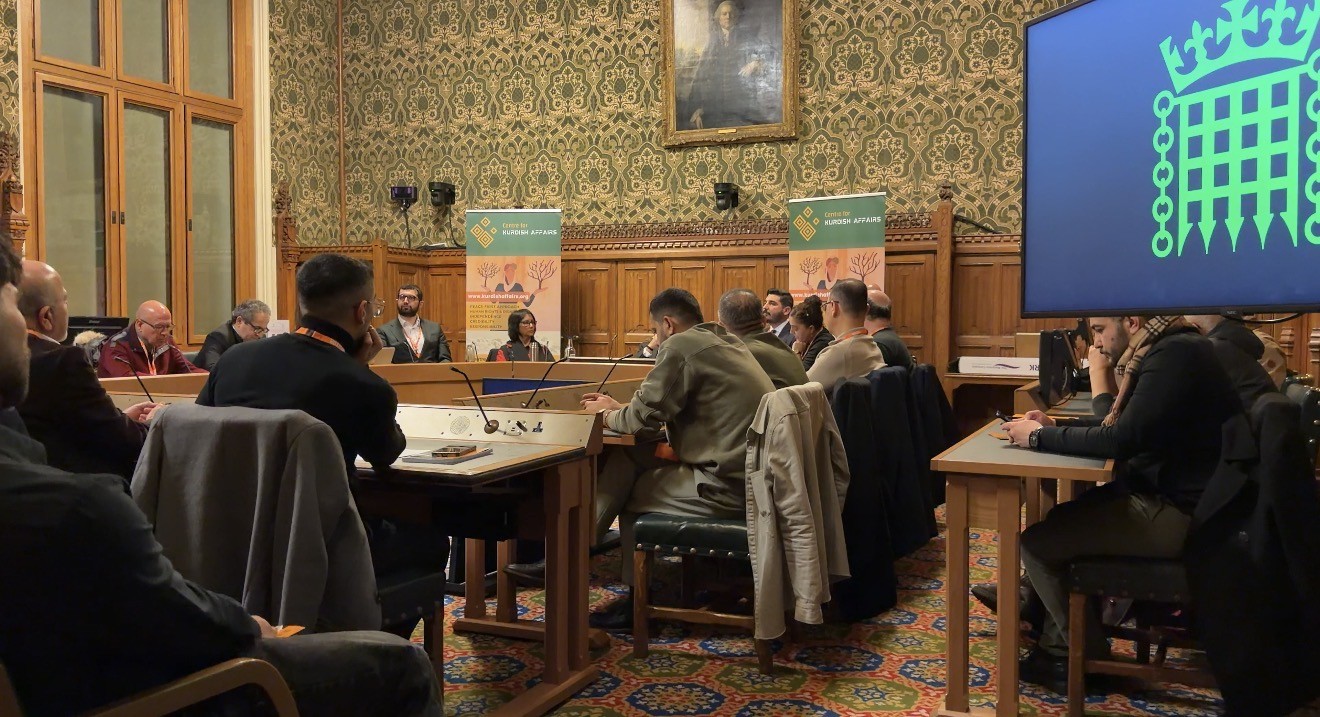
A political event held in February inside the UK Parliament building brought together members of the Kurdish community alongside political and academic figures, at which both Member of Parliament (MP) Bambos Charalambous and Lord Maurice Glasman spoke to Kurdistan Chronicle about the future of Western Kurdistan (northern Syria) and the UK’s role in Syria and Iraq.
Labour MP Charalambous, elected to the House of Commons in 2017 and known for his engagement with human rights and foreign affairs issues, told Kurdistan Chronicle that the West “owes a significant debt of gratitude” to the Kurds for their decisive role in the defeat of ISIS. He stressed that this alliance must not be forgotten and argued that such recognition should translate into concrete policies ensuring protection for the Kurds and other minorities, including Alawites and Druze.
Charalambous noted that the UK, through the Foreign Office, has the capacity to exert diplomatic pressure to help secure potential ceasefire arrangements and to ensure that future political agreements include firm guarantees for minority protections. He added that he intends to raise these concerns through parliamentary mechanisms, whether via formal questions to the government or by encouraging broader debate on the UK’s policy toward northern Syria.
Lord Glasman, an academic and professor of political theory who has served in the House of Lords since 2011, focused in his remarks to Kurdistan Chronicle on the strategic dimension of the UK’s relationship with the Kurds. He argued that, despite their pivotal contribution to the fight against ISIS, the Kurds have not been recognized as legitimate political partners in international negotiations concerning Syria’s future – a failure he suggested undermines the prospects for a just and lasting settlement.
Glasman maintained that durable stability in Syria will not be possible unless the Kurds are formally recognized as a legitimate component of the Syrian state, with full respect for their language, culture, and rights to local administration, particularly in education. Excluding them from political processes, he argued, risks perpetuating rather than resolving the crisis.
On a broader strategic level, he suggested that if the UK wishes to strengthen its influence in both Syria and Iraq, it should invest in building strong and enduring relationships with the Kurds in both countries. In his view, the Kurds have proved themselves reliable allies in the struggle against terrorism, and deepening that partnership would represent not only a moral obligation, but also a practical means of enhancing UK influence in the region.
Together, their remarks reflect a strand of thinking within parts of UK political circles that combines ethical responsibility toward former allies with a strategic reassessment of the UK’s role in a complex and evolving Middle Eastern landscape.
Kurdistan Chronicle is a monthly English-language magazine based in the Kurdistan Region of Iraq