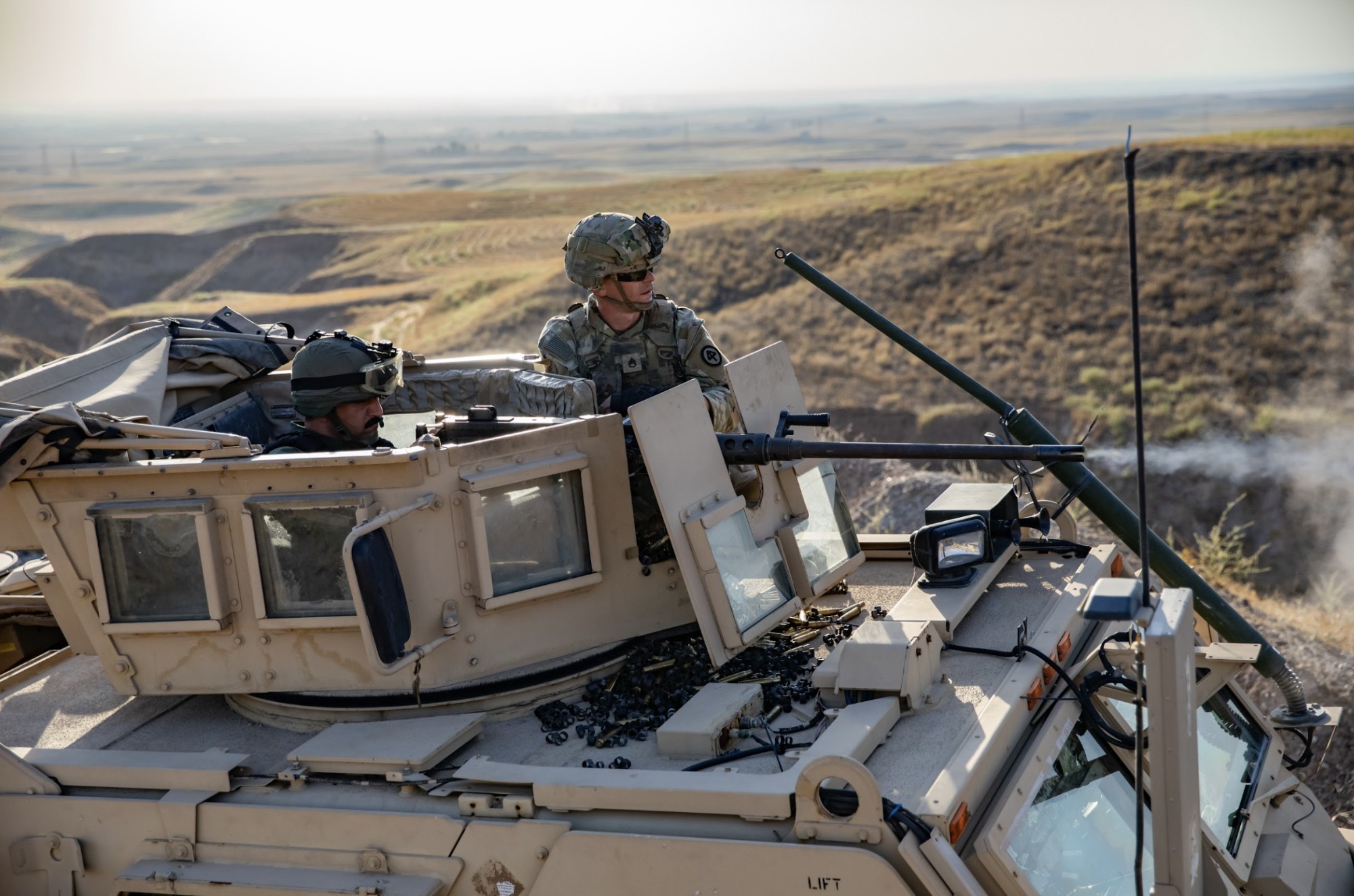
According to the latest Pentagon Inspector General report published on May 27, the Kurdish Peshmerga lack sufficient air defenses to cover the Kurdistan Region of Iraq, leaving their forces and energy infrastructure highly vulnerable to attacks by Iran-backed groups.
The report mentioned that air defense systems operated by U.S. forces intercepted dozens of missile and drone attacks in the Kurdistan Region, but only in the vicinity of U.S. facilities.
The report also mentioned that the “Erbil Air Base provided air defense coverage for most remaining U.S. forces in the IKR (Iraqi Kurdistan Region) under heavy attacks by Iran and Iran-aligned militias. In anticipation of OEF, CJTF-OIR reduced personnel numbers there to enhance force protection.”
Read More: KRG PM Calls for Protection of Kurdistan’s Energy Infrastructure
On April 18, Kurdistan Regional Government (KRG) Prime Minister Masrour Barzani urged “our international partners to provide the equipment necessary to protect Kurdistan from these ongoing threats, including our civilian and energy infrastructure.”
Also in a phone call with U.S. Secretary of Energy Chris Wright on March 30, Prime Minister Barzani called for support to protect Kurdistan’s energy infrastructure.
“I also underlined the need for continued coordination and support to protect Kurdistan’s energy infrastructure, lift the trade embargo imposed on the Kurdistan Region, and stop terrorist attacks on oil companies operating in the Kurdistan Region in order to increase production and exports,” Prime Minister Barzani said in a post on X at the time.
The report also added that “drones targeted the residences of [Kurdistan Region] President Nechirvan Barzani and the residence of President Masoud Barzani on March 28 and 29; the strikes were so extreme that even the Iranian Revolutionary Guard Corps issued a formal condemnation.”
In a report on April 25, the KRG Department of Media and Information said that, between February 28 and April 20, a total of 20 people were killed and 123 wounded in 809 drone and missile attacks targeting the Kurdistan Region of Iraq.
Read More: KRG Records 809 Attacks on Kurdistan Region
The KRG Department of Media and Information said that civilian areas in the region, the lives and property of citizens, and private sector infrastructure have been repeatedly targeted by drone and missile attacks under various unfounded pretexts.
On November 27, 2025, after attacks on the Khor Mor gas field, Aziz Ahmad, Deputy Chief of Staff to KRG Prime Minister Barzani, said in a post on X that the UK could help by accepting KRG-issued end-user certificates for anti-drone systems.
He said that a British company had delivered an anti-drone system to Khor Mor, but that the system was not working because “the UK government won’t accept KRG-issued end-user certificates, and Baghdad refuses to issue one.”
A seasoned reporter and analyst who specializes in Kurdish affairs.