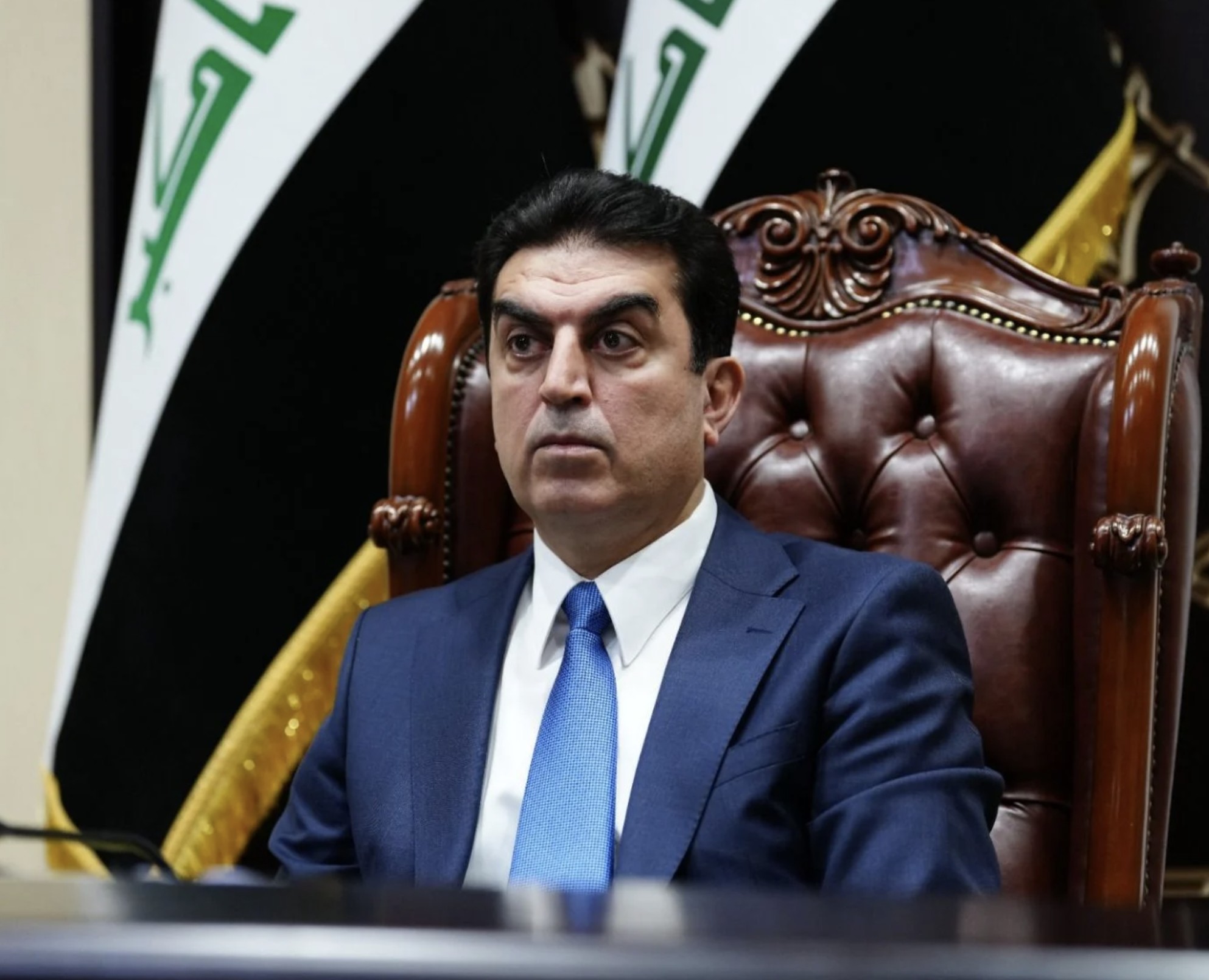
On Tuesday, Iraqi Deputy Speaker of Parliament Farhad Atroushi rejected a statement by First Deputy Speaker of Parliament Adnan Faihan al-Dulaimi, who on Monday called for a halt to financial funding to the Kurdistan Region of Iraq, including suspending the salaries of the region’s employees until a final Baghdad-Erbil agreement is reached.
“Employee salaries are a red line and should not be subject to political pressure or used as a bargaining chip,” the media office of Deputy Speaker Atroushi said.
“Any attempt to link the salaries and entitlements of Kurdistan Region employees to accounting disputes or non-oil revenues blatantly contradicts the ruling of the Federal Supreme Court, which clearly ruled that the issue of salaries must be separated from any political or financial disputes or obligations between Baghdad and Erbil.”
He also underlined that “the salaries of the region’s employees are equal to those of their counterparts in the rest of Iraq’s provinces; these are constitutional and livelihood rights that must not be held hostage to any punitive measures or reciprocal settlements. The question here concerns Iraq’s public revenues: are they the same as in previous years?
“The issue of regulating the financial relationship between the federal government and the Kurdistan Regional Government (KRG) must be based on the spirit of national partnership and the protection of the rights of all citizens without discrimination, We must avoid inflammatory and threatening language and instead rely on mutual understanding, constructive dialogue, and direct technical meetings to resolve the issue of financial settlements within the framework of the Constitution and the law, far from the livelihood of the ordinary citizen,” he added.
Since 2014, Baghdad has repeatedly cut the Kurdistan Region’s budget and salaries, affecting the livelihoods of Kurdish citizens.
In July 2025, the KRG and Baghdad struck a deal for the KRG to deliver 230,000 barrels of oil daily and 120 billion Iraqi dinars in non-oil revenues in order to resume oil exports that have been halted since 2023.
However, there are now talks to reduce the obligatory amount of non-oil revenue due to the economic damage caused by the war between the United States, Israel, and Iran, which also led to the closure of Iraqi airspace for 39 days, including Erbil Airport.
A seasoned reporter and analyst who specializes in Kurdish affairs.