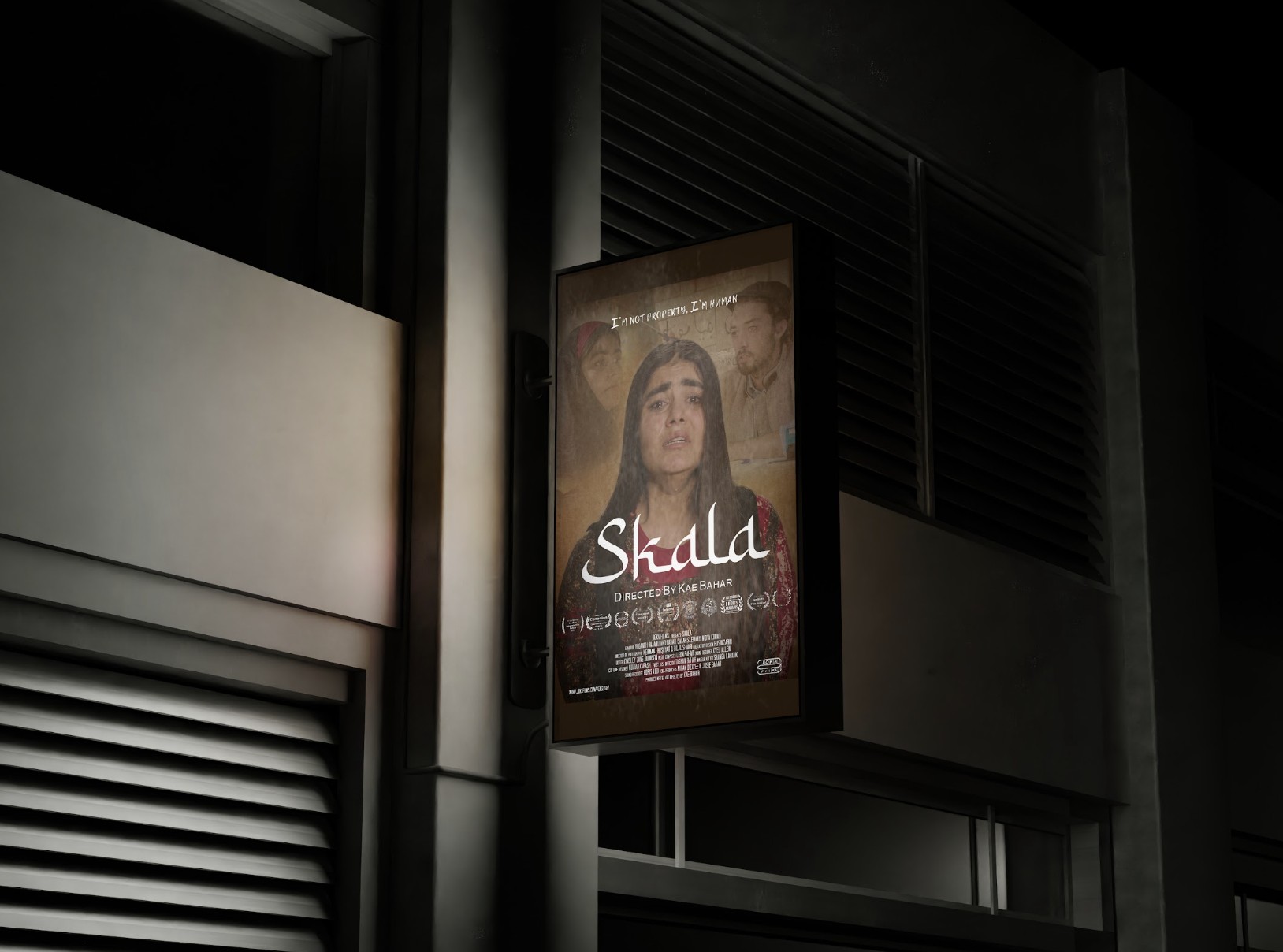
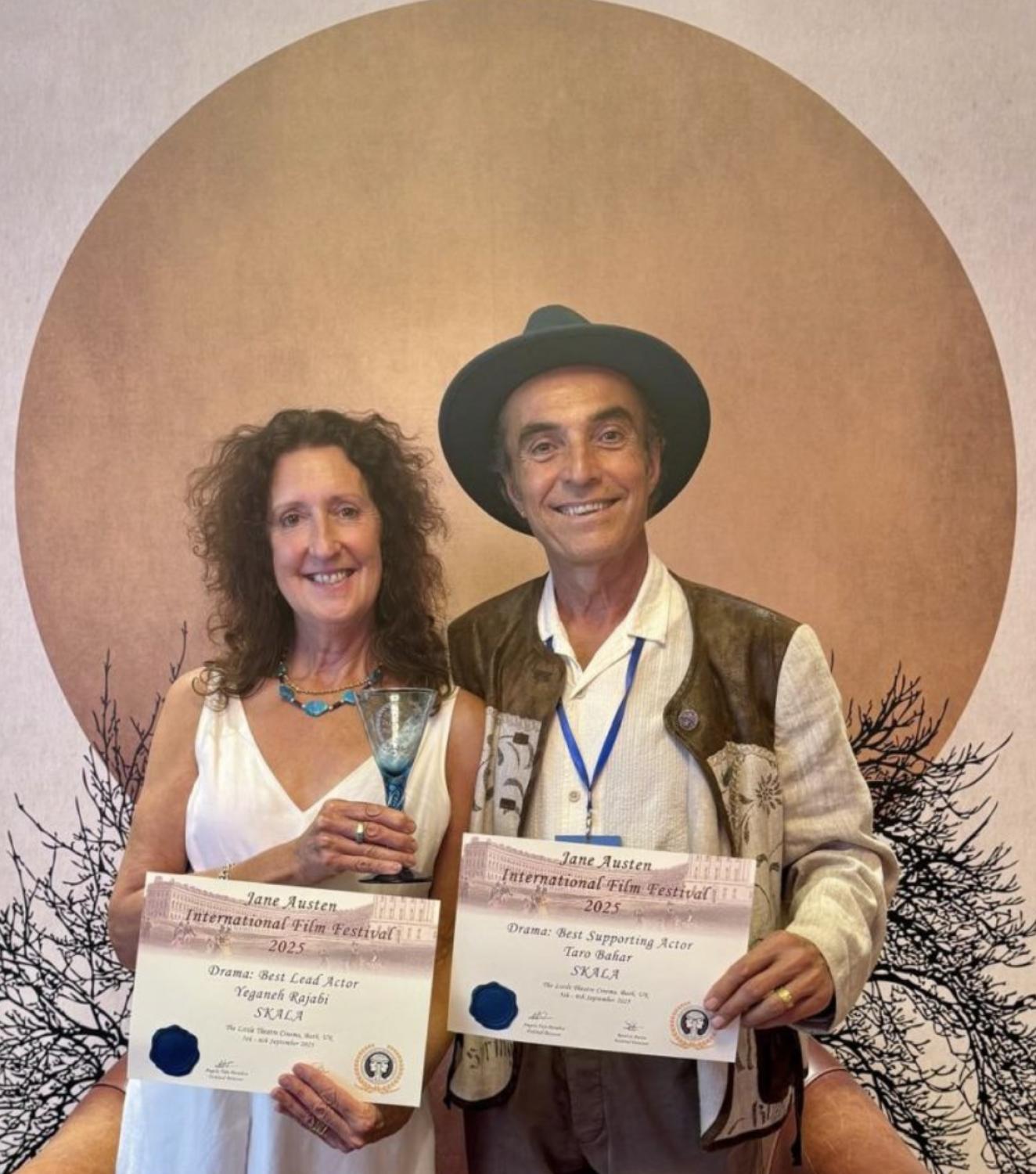
Recently, Kurdish-British filmmaker Kae Bahar, founder of the Kurdistan Federation of Filmmakers and the Kurdistan Film Institute, reached one of the defining moments of his career when his latest short film, Skala (Petition), won three awards: Best Supporting Actor – Taro Bahar; Best Actor – Yeganeh Rajabi; and Best of the Festival Award at the Jane Austen International Film Festival in the UK. Competing against filmmakers from the United States, UK, Germany, France, Mexico, Taiwan, and beyond, Skala stood out not just for its artistry, but for what it represented: a Kurdish-made story rising to international recognition.
Shot in 2023 over just two days in Erbil as a UK/Kurdistan co-production, Skala was a family effort. Bahar’s wife, Josie, co-produced; their son Taro played the lead role; their daughter Tashan worked as first assistant director; and their youngest son Leon, already an award-winning composer, scored the soundtrack.
“Winning Best of the Festival was an extraordinary moment,” Bahar reflects. “It showed me what can be achieved with almost no budget, just passion and determination. It made me imagine how far we could go if Kurdistan had real support for cinema.”
Cinema as a Platform for the Kurdish Story
Bahar is no stranger to international acclaim. Over the past two decades, his films have won more than 80 awards, been screened at over 200 international festivals, and broadcast on global networks such as BBC, Al Jazeera English, ARTE, PBS, RAI, NHK, and ZDF. His breakthrough short film I Am Sami (2013) was screened at over 160 festivals worldwide and won 59 awards, including 34 for Best Film. Bahar has consistently used cinema as a platform to highlight the Kurdish story. “If I can’t bring the world to Kurdistan, my mission is to take Kurdistan to the world,” he explains.
Now, Bahar is preparing for what could be the most significant milestone in Kurdish film and the Kurdish film industry: his first feature, Roman & Juliet. The romantic political thriller tells the story of a Kurdish man and a young Arab woman whose forbidden love becomes a metaphor for division and reconciliation. At a time when mistrust between communities in the region is deepening, the film dares to imagine dialogue, empathy, and shared humanity as an alternative to conflict.
The project has already attracted interest from European producers and carries the backing of Ali Dolamari, the Kurdistan Regional Government (KRG) Representative in France, and Karwan Jamal, the KRG Representative in the UK. A project proposal has been formally submitted to the KRG, including a letter to Prime Minister Masrour Barzani.
Roman & Juliet has also caught the attention of senior Kurdish officials such as Safeen Dizayee at the KRG Department of Foreign Relations; Bayan Sami Abdul Rahman, the Senior Advisor to Prime Minister Barzani; and KRG Minister of Culture and Youth, Mohammad Said Ali. Bahar stresses that the project is now at a critical stage, awaiting approval from the Council of Ministers to provide essential financial support as part of the total budget.
“Roman & Juliet has the potential to be the first Kurdish film to reach true mainstream international audiences,” Bahar explains. “It can resonate not only with Kurds, but with Arabs, Iraq’s minorities, and viewers worldwide. It can also prove to the world that Kurdish cinema can compete on the highest stage.”
Leading With Culture
For Bahar, the film is more than an artistic project; it is a step toward establishing a sustainable Kurdish film industry. “For decades, films here have been made with passion but without lasting structures,” he notes. “With the right vision and support, we can create an industry that provides jobs, attracts investment, and projects Kurdistan’s image with pride.”
The stakes are clear. Politically, Roman & Juliet offers Kurdistan the chance to lead with culture, where politics has faltered, and build bridges at a time of division. Economically, it highlights film as both art and industry, capable of generating revenue and diversifying beyond oil. Internationally, it positions Kurdistan not just as a land of history and survival, but as a hub of creativity, dialogue, and cultural diplomacy.
With more than four decades of experience in Europe’s creative scene, an international network of collaborators, and an unwavering dedication to his people, Bahar has built a career defined by breaking barriers, from making the first Kurdish film for the BBC to staging Kurdish theater in Italy and publishing an English-language novel in the UK.
Today, through Roman & Juliet, Bahar is asking for something he has never asked before: meaningful support from the KRG. If successful, the project could mark not just a breakthrough for Bahar, but a turning point for the Kurdish film industry itself, transforming it from scattered, underfunded productions into a vibrant industry with global reach.
In Bahar’s words: “This is our chance to tell our story, to the Arab world and to the world beyond, to leave behind a legacy that proves Kurdistan is not only a survivor of history, but a creator of it.”
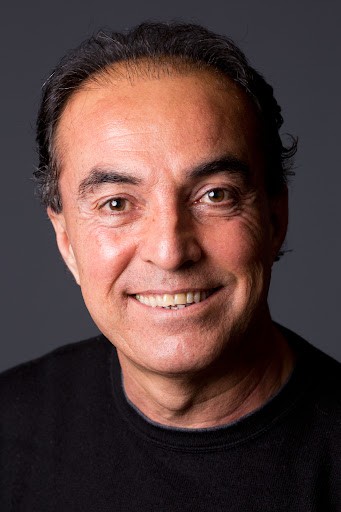
is a Kurdish award-winning writer and director. He has produced documentaries for Channel 4, BBC, and Al Jazeera.