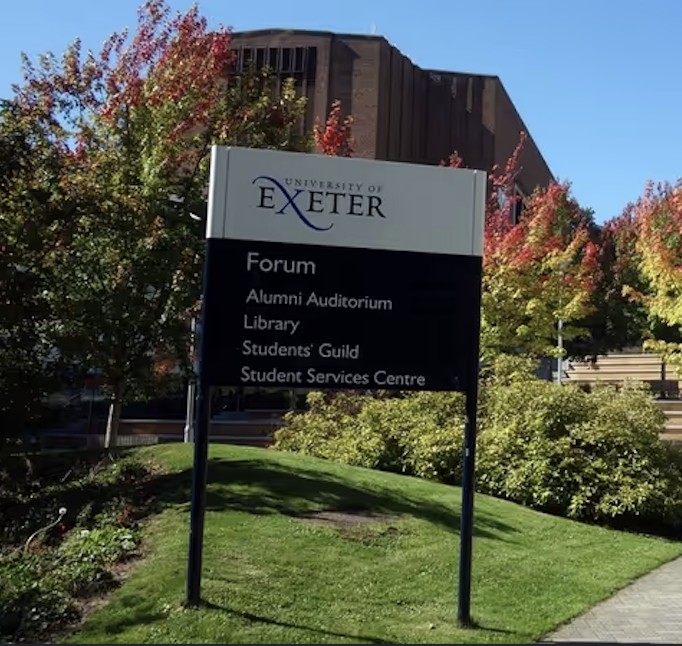
On Monday, three leading Kurdish studies networks warned that planned University of Exeter budget cuts could threaten the Centre for Kurdish Studies (CKS).
The Exeter Observer reported this week that the Exeter branch of the University & College Union has threatened strike action against the University of Exeter over its plan to fire 150 staff while putting more than 500 staff at risk. The move could jeopardize 85% of its humanities, arts and social sciences faculty.
However, the University has stated that it has no plans to close any disciplines or departments as a result of the cuts.
“The CKS is one of only a handful of dedicated, university-based centers worldwide that combine graduate education in Kurdish studies, Kurdish language instruction,
and a permanent community of Kurdish studies scholars,” the Kurdish Studies Journal, the Kurdish Studies Network, and the Kurdish Gender Studies Network — three leading scholarly institutions and networks in the field of Kurdish studies — said in a statement received by Kurdistan Chronicle.
“We understand that all staff members at the CKS, alongside their colleagues at the Institute of Arab and Islamic Studies, have been placed at risk of redundancy. With a planned reduction of teaching-related staff at a rate of 20–25%, these cuts will have devastating consequences for Kurdish studies, which is already structurally disadvantaged.”
The CKS was founded in 2006 at the University of Exeter, one of the rare Kurdish studies programs in the UK. The Centre has offered a MA in Kurdish Studies since 2007 and also teaches Sorani and Kurmanji Kurdish to students.
“As a stateless field of study, Kurdish studies lacks the institutional support that many other area studies disciplines enjoy. Kurdish studies scholars routinely contend with epistemic violence, censorship, and political repression, while also facing chronic shortages of funding, academic infrastructure, and institutional recognition,” the scholarly institutions said.
The statement added that Exeter’s CKS has served as an indispensable institutional anchor for the discipline and over the years, the CKS has trained dozens of graduate students, while its staff have produced internationally recognized scholarship that has transformed our understanding of Kurdish history, culture, politics, and society.
Read More: New Kurdish Digital Archive Launched
Moreover, the Centre is also home to one of the world’s most important Kurdish studies libraries, including the private collections of Chris Kutschera and Omar Sheikhmous.
“Its Kurdish Digital Archive, part of Exeter’s Digital Archive of the Middle East, is an exceptional initiative dedicated to preserving and providing open access to Kurdish archival materials that might otherwise be lost or destroyed,” the statement added.
“We are deeply concerned that the proposed cuts will have profound consequences not only for the University of Exeter, but for the wider field of Kurdish studies. They will diminish educational opportunities, reduce research capacity, and threaten the future of Kurdish language teaching,” the statement concluded.
“They also jeopardize scholarly initiatives that are essential for documenting and safeguarding Kurdish language, culture, history, and society. In this sense, the proposed cuts constitute a further act of epistemic marginalization against an already vulnerable field, at a time when rigorous scholarship on the Kurds — a people who remain central to the political and geopolitical dynamics of the Middle East — is more important than ever.”
The three leading Kurdish studies networks urged the University of Exeter to reaffirm its commitment to preserving the institutional integrity of the CKS and to continue investing in its staff, student body, and material resources.
A seasoned reporter and analyst who specializes in Kurdish affairs.