The first documented evidence of prey-caching by a breeding female
leopard in Kurdistan
Leopards Beyond Borders
On April 3, 2025, on Bamo Mountain, Mazhar Hamid, a local man foraging for wild plants, came face to face with one of the Kurdistan Region’s rarest and most elusive animals: the Zagrosian leopard.
The leopard did not attack. It did not stand its ground. It fled.
What it left behind, however, would become one of the most important wildlife discoveries ever documented in the Kurdistan Region: the carefully concealed carcass of a male bezoar goat, hidden in a rocky shelter.
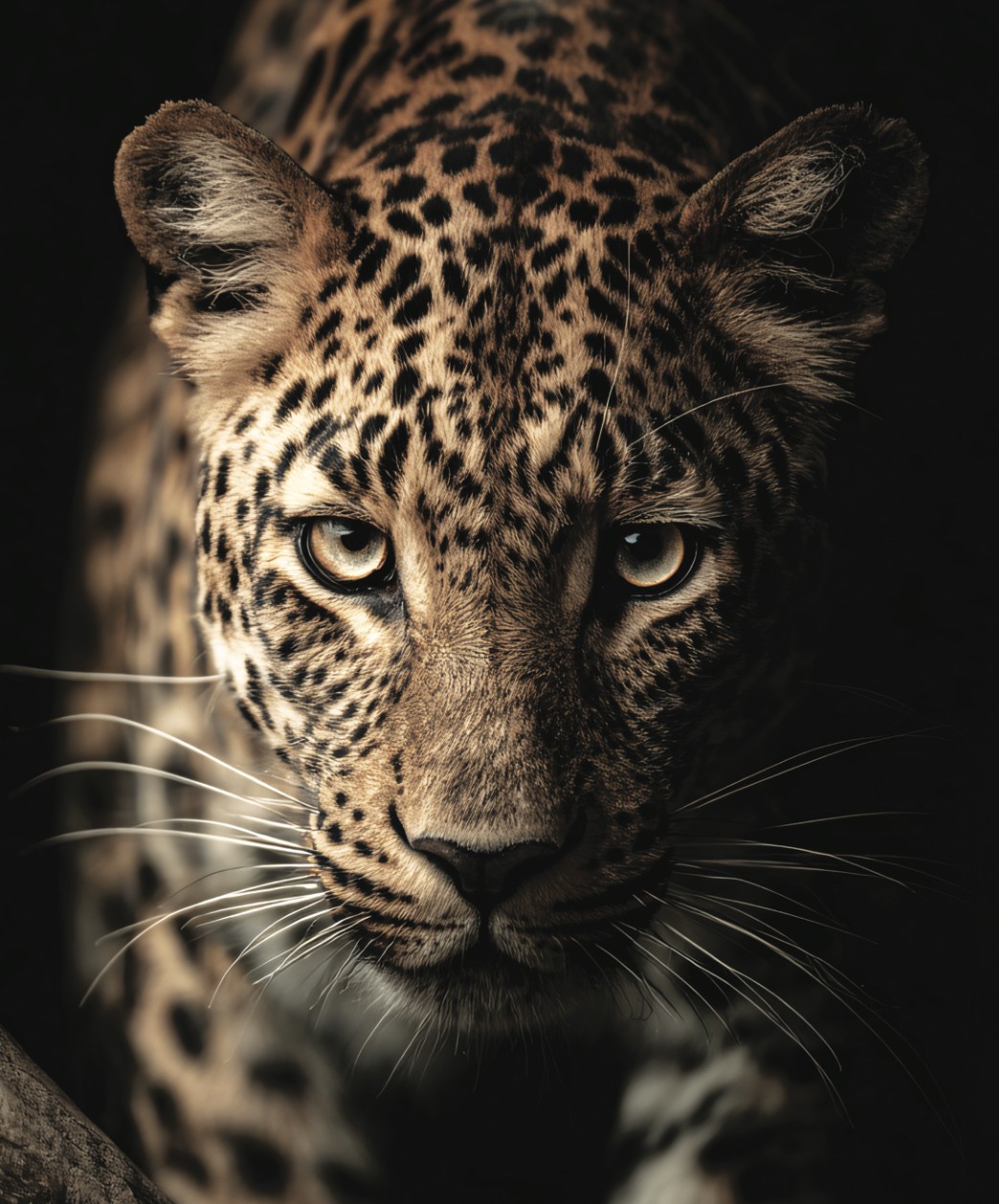
For conservationists from Leopards Beyond Borders, the discovery was more than just evidence of a successful hunt. It was the first documented case in Iraq of prey-caching behavior by a leopard — and the animal responsible was no ordinary individual. She was “Kurdistan,” the only known breeding female leopard documented in Iraq to date.
A Female Called “Kurdistan”
For several years, camera traps placed across the rugged Zagros Mountains had quietly recorded the movements of a female leopard whose story had become central to hopes for the species’ survival in the region.
In 2022, early footage suggested she might be pregnant. Months later, the suspicion was confirmed when she appeared with two cubs: a male later named Hiwa and a female named Nishtiman. The following year, only one cub was recorded. Then, in 2025, she was filmed again showing signs of pregnancy.
In a landscape where leopards survive in small, fragmented populations, such evidence is extraordinary. It suggests that parts of the Kurdistan Region still support a breeding leopard population.
The Discovery in Bamo
Now, the leopard named Kurdistan has revealed another rare chapter in her hidden life.
The story began unexpectedly in April 2025, when Hamid encountered her. When he approached the rocky shelter where Kurdistan had been resting, he found the carcass of the wild goat. It had not been left exposed. Instead, it had been deliberately hidden beneath stones and vegetation — a classic sign of a predator protecting its kill.
The next morning, the Leopards Beyond Borders team visited the site. The evidence was clear. The goat, estimated to be between two and three years old, had been killed by a precise bite to the throat. Only a small portion of the carcass had been eaten, suggesting she may have been disturbed before finishing.
The behavior is known as prey caching. Leopards and other large carnivores sometimes conceal their kills to protect them from scavengers and return to feed over several days. Though documented elsewhere in the animal’s range, this was the first time that prey caching had been recorded in Iraq.
To confirm what had happened, the team installed a camera trap near the site.
That night, Kurdistan returned.
The camera footage showed the leopard returning twice to the cached carcass. She fed once in the early evening for 43 minutes, and again later that night for 33 minutes. By the following day, only remains were left, and she did not return. The footage allowed the team to identify her clearly as Kurdistan, the same female previously recorded with cubs.
From this single observation, the team gained several important insights. The evidence suggested that Kurdistan had hunted the goat herself, targeting a healthy animal rather than a weak or dying one. A single wild goat was enough to sustain the female leopard through several feeding sessions and, based on the remains and feeding pattern, the team estimated that she consumed roughly 18 to 25 kilograms of meat over four to five feeding bouts.
For a species so rarely seen, every detail matters.
Rethinking the Leopard
In many communities, leopards are feared as threats to people and livestock. Such misperceptions can have deadly consequences, leading to retaliation and the killing of animals already struggling to survive.
But the Bamo encounter tells a different story.
When confronted by a human at close range, Kurdistan did not attack. Instead, she retreated immediately, abandoning both her shelter and her kill. Her response reflected what researchers and conservationists have long observed: leopards are highly elusive animals that generally avoid people whenever possible — a reality that, more widely understood, could mean the difference between coexistence and retaliation.
Why This Matters
The significance of this discovery extends far beyond a single carcass in a rocky shelter.
Kurdistan’s repeated reproduction suggests that parts of the Kurdistan Region’s mountainous landscapes still provide the conditions leopards need to survive and breed. The presence of bezoar goats, though increasingly scarce, confirms that essential prey species remain. The documented caching behavior also reveals the complex pressures of the ecosystem, where a predator must secure food, avoid scavengers, and navigate the growing presence of humans.
Protecting these animals is not only about saving a single species. It is about protecting an entire mountain ecosystem — the prey, the predators, the habitats, and the communities that share the landscape with them.
As Leopards Beyond Borders continues its conservation work, each new record strengthens the case for formal protection of these habitats. Each image, track, and observation adds to the evidence that these mountains still hold life worth saving.
Yet the species’ future remains uncertain.
Kurdistan, the female at the center of this story, is now estimated to be eight to nine years old. She likely has only a few breeding years remaining. With age, her strength, dominance, and hunting ability will inevitably decline. Her future — and the future of any cubs she may still raise — depends on whether the landscape around her remains safe enough to sustain them.
A Species on the Edge
The leopard subspecies found in the Kurdistan Region, Panthera pardus tulliana, is classified as endangered and has disappeared from large parts of its historical range. In the Kurdistan Region, it survives only in small, fragmented populations across the Zagros Mountains.
Scientific studies and field observations show that bezoar goats and wild boar form the backbone of the leopard’s diet. Conserving these prey species is therefore essential to the leopard’s survival.
The discovery in Bamo offers a rare and intimate glimpse into the life of one female leopard. It reveals her as a hunter, a mother, a survivor, and a symbol of what remains possible in the Kurdistan Region’s wild mountains.
A single hidden kill revealed a story much larger than itself. Kurdistan’s leopards are still here, and there is still a chance to protect them.
Hana Raza is founder of Leopards Beyond Borders.
Bahez Farooq Ali is a wildlife expert and conservationist with over 15 years of experience.
Nabaz Horeni has spent more than 20 years studying and documenting wildlife.