Dalal Hassane’s journey bridges diaspora, identity, and culture
At the Kurdish Film Festival in Chicago — an event sponsored by Kurdistan Chronicle — I met a young woman and her mother who stopped at our display table. They picked up a magazine and began a conversation; the mother spoke in fluent Kurdish, while the daughter, who introduced herself as Dalal, spoke in English.
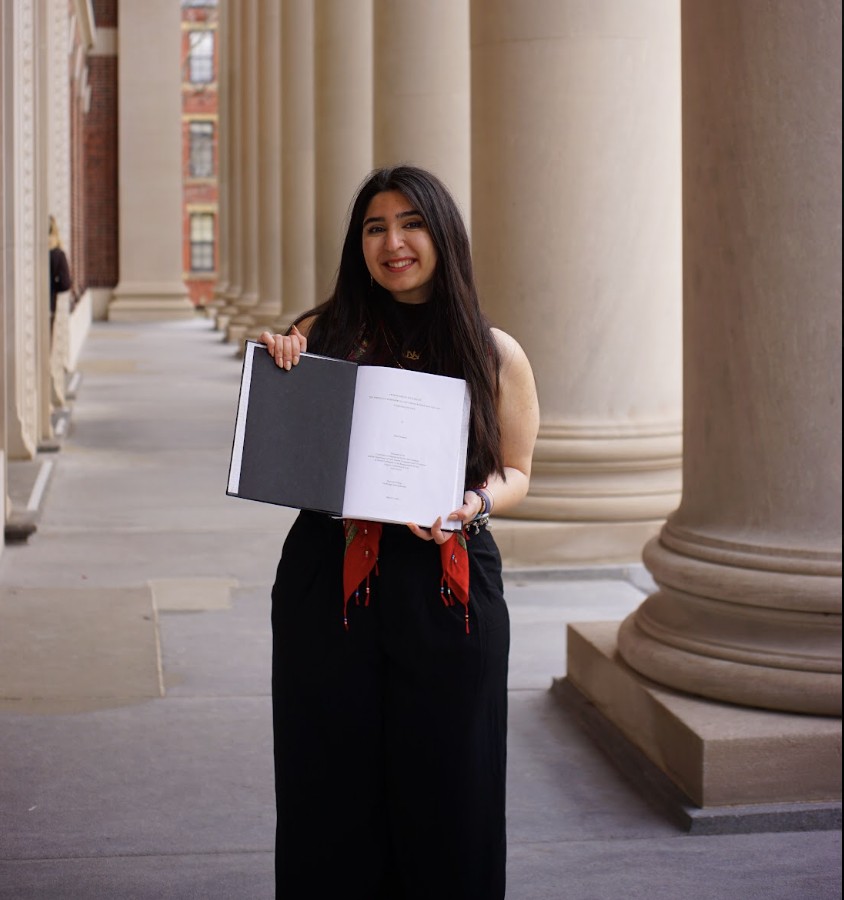
Dalal Hassane was born and raised in Chicago to a Kurdish mother from Halabja and a Syrian father from Jableh. She is currently a fourth-year student at Harvard University, specializing in History and Literature with a focus on the modern Middle East. Her senior thesis explores memory and the senses in Iraqi and Kurdish literature, focusing specifically on Bachtyar Ali’s The Last Pomegranate Tree and Sinan Antoon’s The Corpse Washer.
In both Kurdish and Arabic, the name Dalal carries a beautiful weight, meaning “beloved” and “cherished” in Kurdish and “pampered” and “spoiled” in Arabic. I was curious to know how she navigates her identity, being raised in the United States within a dual Kurdish and Arab heritage. “I would say that I identify as Kurdish and Syrian first and foremost, because it is these identities that have built my conception of self against the backdrop of a political context that is so heavily focused on othering the region from which my family hails,” Dalal answered without hesitation.
Though she grew up in a multilingual household, she only learned Arabic and English, as these were the common languages between her parents. However, this delay in fluency of Kurdish did not deter Dalal from learning about her mother’s experiences in Kurdistan and spreading awareness in her own communities in the United States. Her mother made it a priority to teach Dalal Kurdish history through the stories of her childhood, which immensely impacted Dalal’s own conception of identity and commitment to Kurdish studies in an academic context.
A Language Finds Its Place
In her first semester at Harvard, Dalal immediately enrolled in Arabic courses, but she was disappointed to find that no Kurdish language classes were offered. Determined to change that, she reached out to the Near Eastern Languages and Civilizations department.
“I wanted to explore the possibility of offering a course in the future, and they were incredibly supportive and willing to help,” Dalal said.
Over the next year, Dalal worked closely with the department to identify qualified academics nearby. By the spring of her freshman year, her advocacy paid off: Sorani Kurdish officially appeared in the course catalog for the following term, making her the first student to study the language at Harvard.
Dalal emphasized that the course filled a long-standing gap at the university. “I’ve had conversations with professors who highlighted the significance of offering Kurdish, especially since there had been interest in the past, but it was never made a reality,” she noted. “When it was first offered, the interest primarily came from graduate students studying the modern Middle East and heritage students — those with a familial or cultural connection to Kurdish communities.”
The program has only grown since then. “In my second and third years, the class progressed to the Intermediate and Advanced levels,” Dalal said. “As I graduate, the course will begin a new cycle in the fall, with an Elementary level class being offered again.”
For Dalal, Kurdish identity has been pivotal in shaping the person she is today, teaching her the importance of memory and oral storytelling in preserving experiences left at the margins of dominant historical narratives. “People often immediately assume that I am a passive product of Arabization because I did not grow up speaking Kurdish, but this perspective neglects the years-long efforts of connecting with my Kurdish roots through my mother’s stories, literature in translation, and engagements with media and cultural production produced by and for Kurdish communities.”
Her Kurdish and Arab identities exist in tandem, “not in opposition to one another.” It is precisely because of these dual identities, she emphasized, that she has been exposed to the power of art and culture in the preservation of memory. “One of the first poems my parents both introduced me to was Mahmoud Darwish’s ‘The Kurd Has Only the Wind,’ which Darwish dedicated to his friend, Kurdish poet Salim Barakat. There is one line in particular that will forever resonate with me:
‘With language, you overcame identity, I told the Kurd, with language you took revenge on absence.’
“It is because of works like this, coupled with my parents’ teachings, that I continue to learn Kurdish to ‘take revenge on absence’,” Dalal said.
Her Mother’s Hands
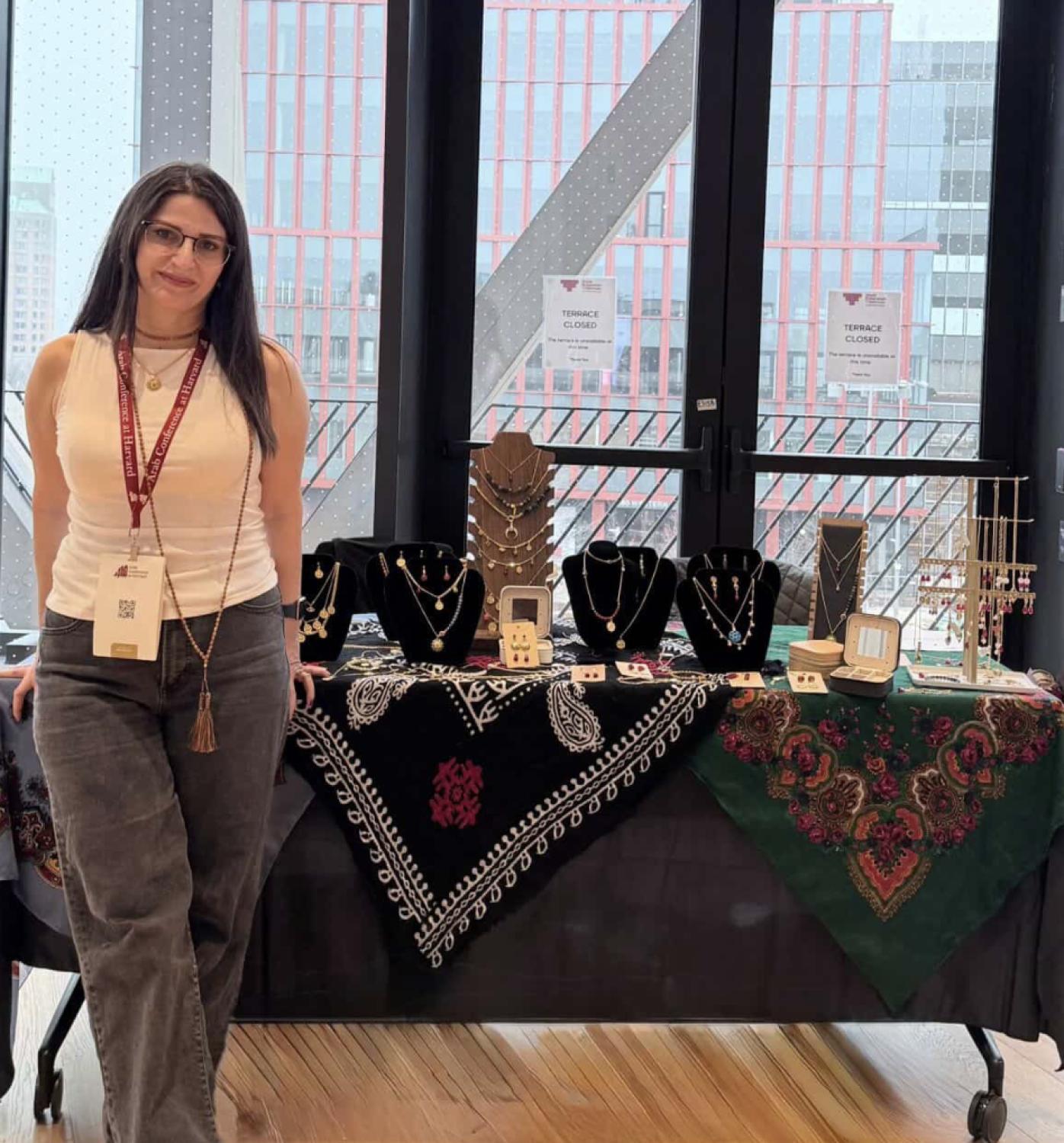
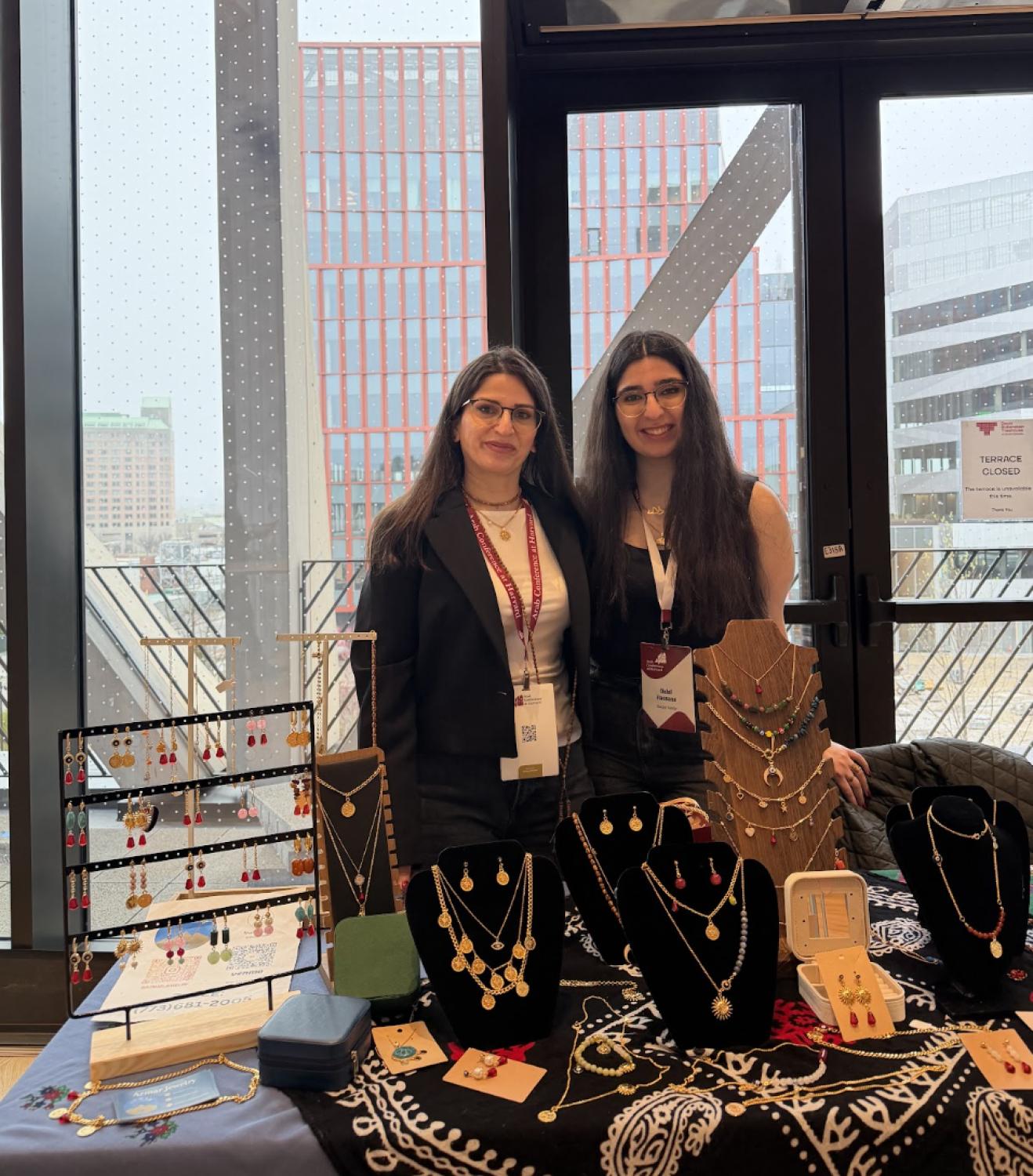
Dalal’s mother, Shelan Fatah, has maintained a lifelong passion for jewelry. Though displacement once forced her to pause her craft, she picked it back up when Dalal began researching Kurdish jewelry for an event at Harvard.
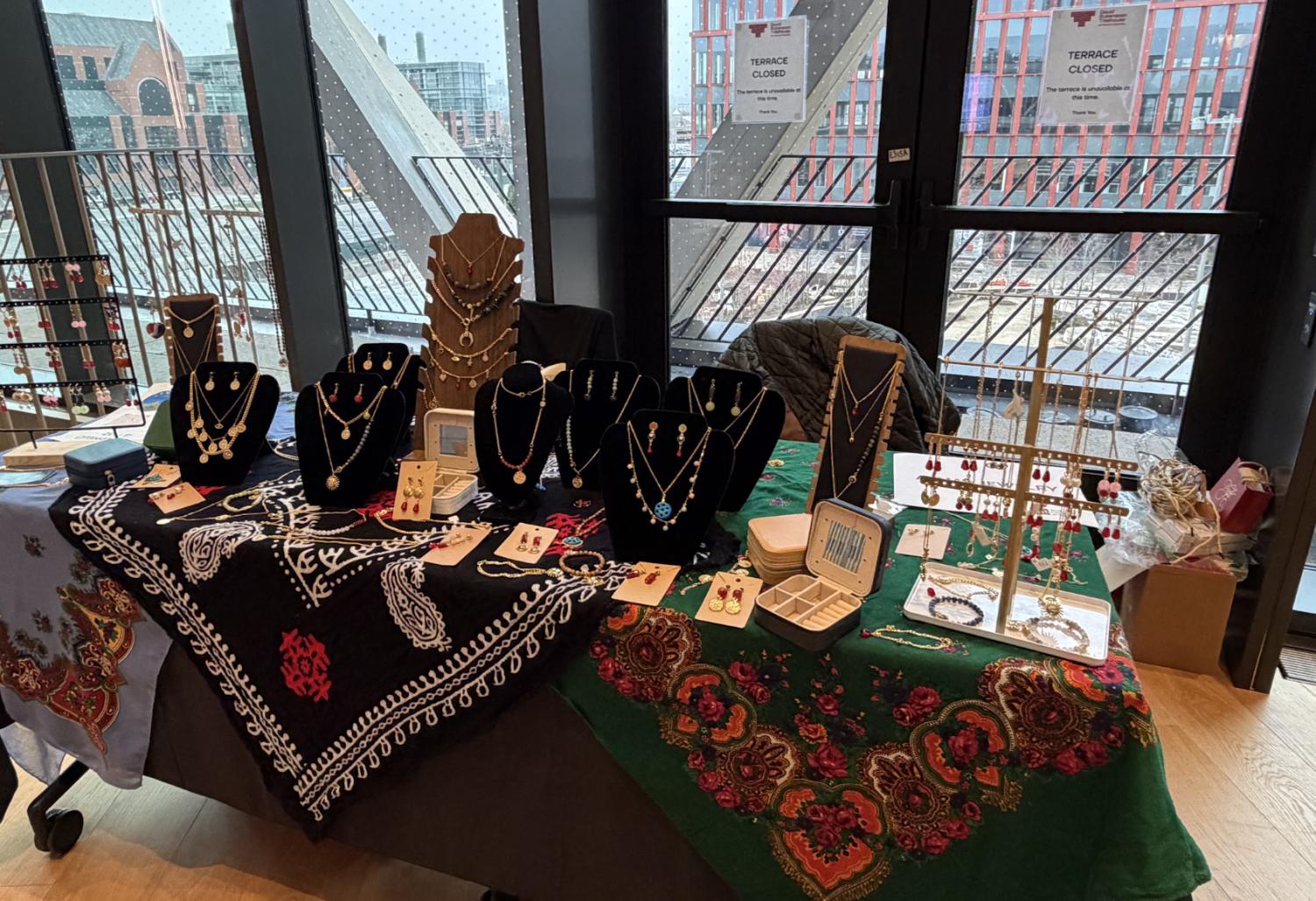
Dalal explains that a few years ago, during the spring of her freshman year, one of her friends — the organizer of the Bazaar at the Arab Conference at Harvard — asked if Dalal and her mother wanted to sell jewelry there. “This marked my mother’s ‘debut’ as a business, if you will,” Dalal said.
Back in the 1990s, during her teenage years, Shelan used to handcraft jewelry and accessories, selling them at the Qaysari Naqib market in the city of Sulaymaniyah. “It was one of my most beloved hobbies,” she recalled.
For Shelan, her craft is deeply tied to her identity. “To me, Kurdistan represents resistance and power, and it is our martyrs who make it the most beautiful land in the world,” she said. “When I look at our mountains, I see the enduring resistance of the Kurdish people. When I see the scarves, and how we wave as we dance, I feel a sense of life, freedom, and happiness.” She infuses that profound love for her homeland into her creations. “Through my work, I try to teach the importance of Kurdish culture in the simplest of ways — especially through our traditions and the beautiful teachings of our ancestors.”
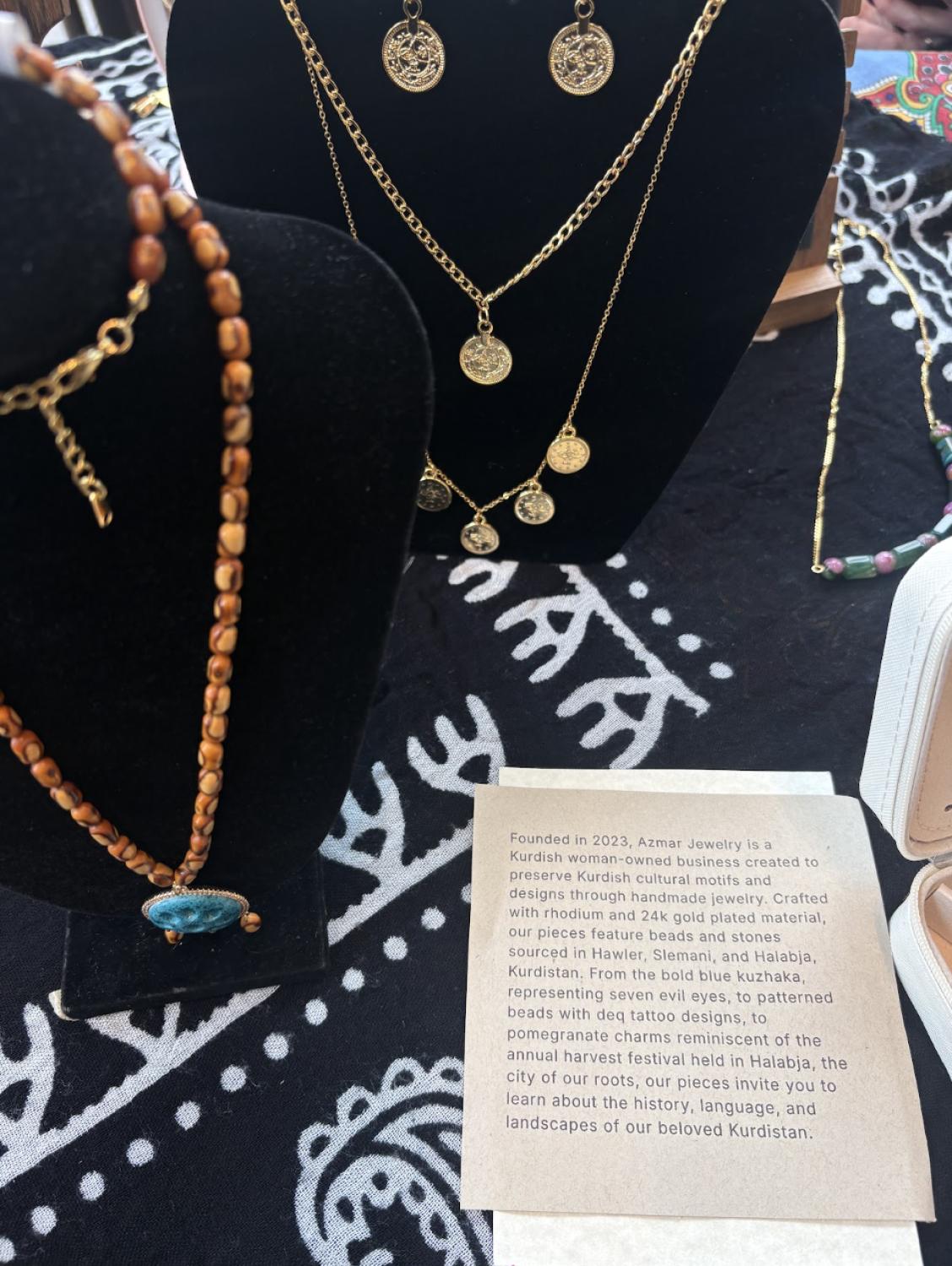
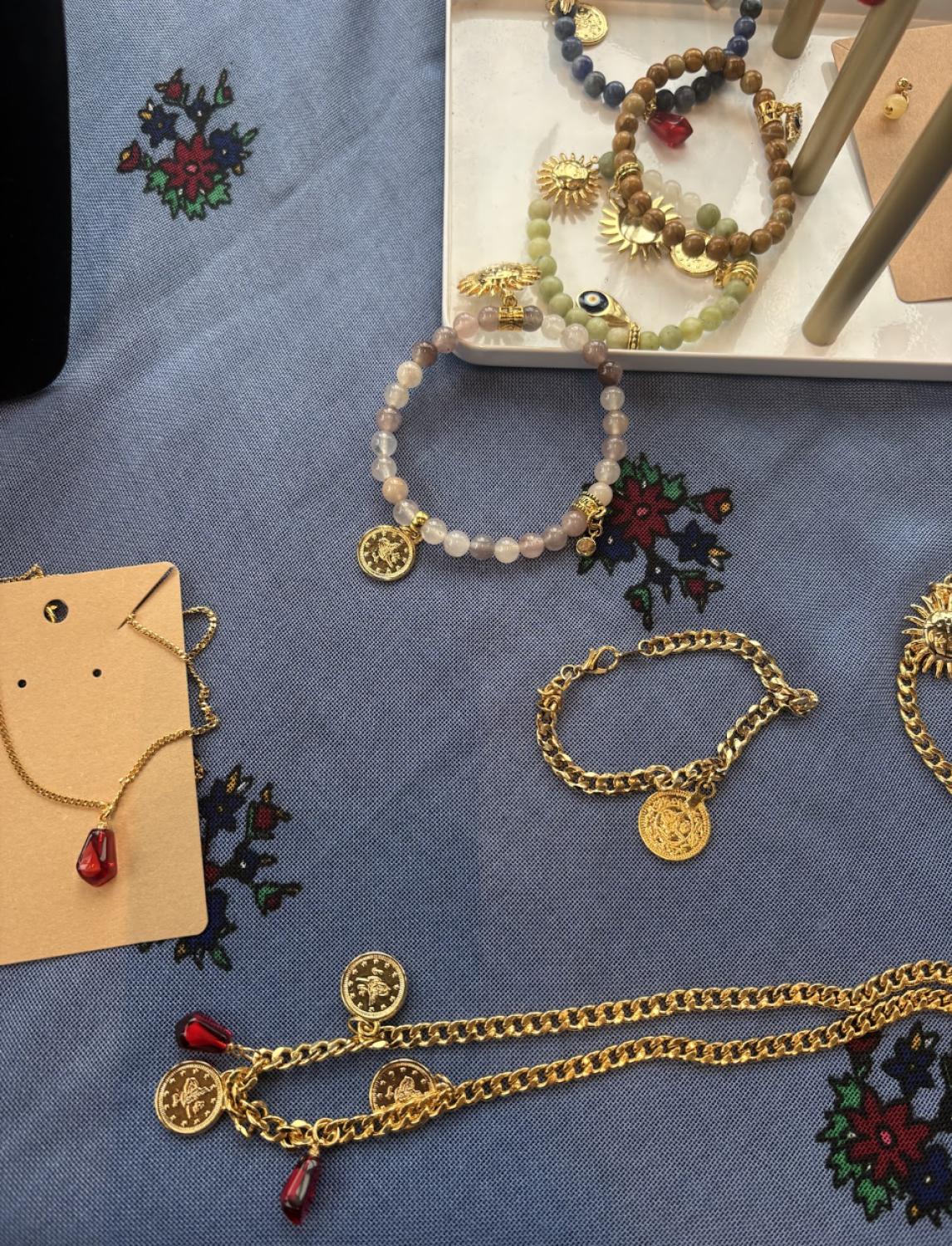
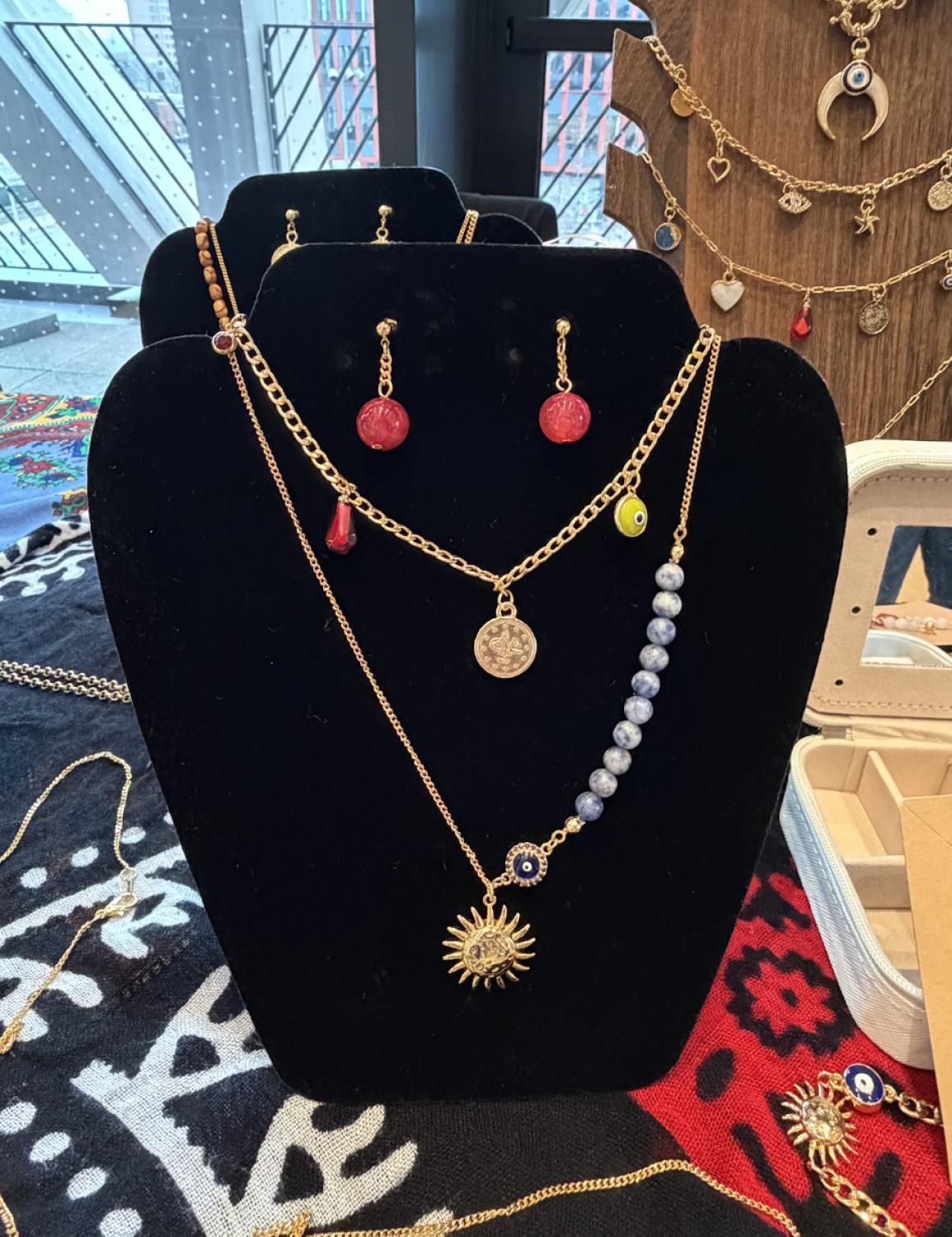
Shelan’s jewelry incorporates motifs and designs rooted in Kurdish heritage, including the bright blue kuzhaka, pomegranate seed charms, sun charms, and handmade beads sourced in Kurdistan. She blends these motifs with contemporary designs she continues to experiment with, and says her goal is “to share the beauty and power of Kurdish culture with those who wear my jewelry.”
Beyond the aesthetic, her jewelry reflects the beauty of Kurdistan’s nature while telling the history of the Halabja massacre. Shelan still remembers 1984, when her family left Sulaymaniyah and went to the Ahmadawa Mountains to stay with the Peshmerga and experienced the beauty of Kurdistan’s mountains and waterfalls for the first time. Like most Kurds in Iraq who faced displacement multiple times, her family eventually ended up in Halabja. By 1988, when Halabja was hit by chemical weapons from the Iraqi Ba’athist regime, she fled to Iran. These memories — and her family’s connection to Halabja — are what she hopes to embody in her jewelry.
Now, Shelan feels at ease knowing that through her guidance, Dalal has become much more familiar with the Kurdish cause. Shelan continues to advocate for Kurds through her business, where she showcases the rich history of Kurdish people. At every market where they sell, “I have incredibly special conversations with people who exhibit curiosity in my work, which serves as a constant reminder of why this work is important.”
A First Return
Dalal has visited the Kurdistan Region twice. Her first trip in 2021 was also her mother’s first time back in 23 years. “The moment we landed in Erbil, everything seemed to fall into place,” Dalal recalled. “I heard people speaking the language of my ancestors, greeting one another with the phrases and words that have touched my heart since I was a child.” They traveled by car to Sulaymaniyah, where Dalal met her mother’s aunt and cousins for the first time and witnessed her mother embracing them after more than two decades apart.
Nothing compared to the moment she first beheld Azmar Mountain. For Dalal, the feeling of being in a home that felt both unfamiliar and deeply rooted was transformative. “This was a turning point in my relationship to Kurdistan,” she said. “It was when I began to take my language journey seriously and reconnect with my culture through art and history.”
After graduation, Dalal plans to spend time in the Middle East and Kurdistan, working on research related to cultural production and heritage preservation. “I hope to pursue a PhD and become a scholar of Kurdish and Arab literature, with a focus on Kurdish cultural production during and after the Anfal Campaign,” she explained. She aims to bring Kurdish literature and history to the forefront of academic work on the modern Middle East, moving them beyond the footnotes and margins. “Once I master Kurdish, I also hope to become a literary translator and share Kurdish works with an English-speaking audience, including those in the diaspora who, like me, did not grow up speaking Kurdish as their first language.”
For Dalal, this journey is deeply personal. “I hope one day to live in a world in which my identity as a Kurdish-Arab woman in the diaspora is not viewed as a contradiction, but rather as a testament to the beauty of difference.”
A Kurdish-American journalist overseeing the US Desk at Kurdistan Chronicle.