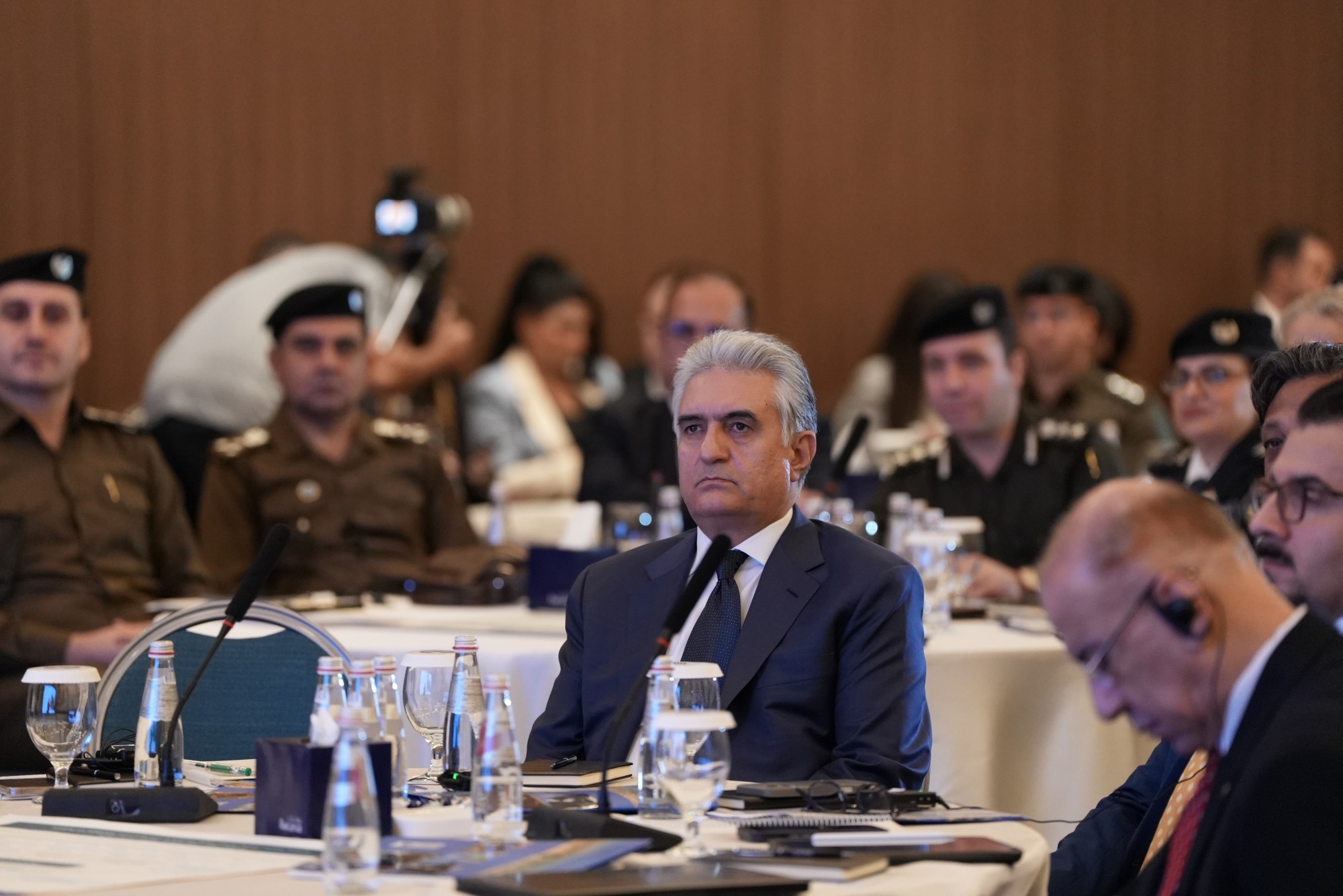
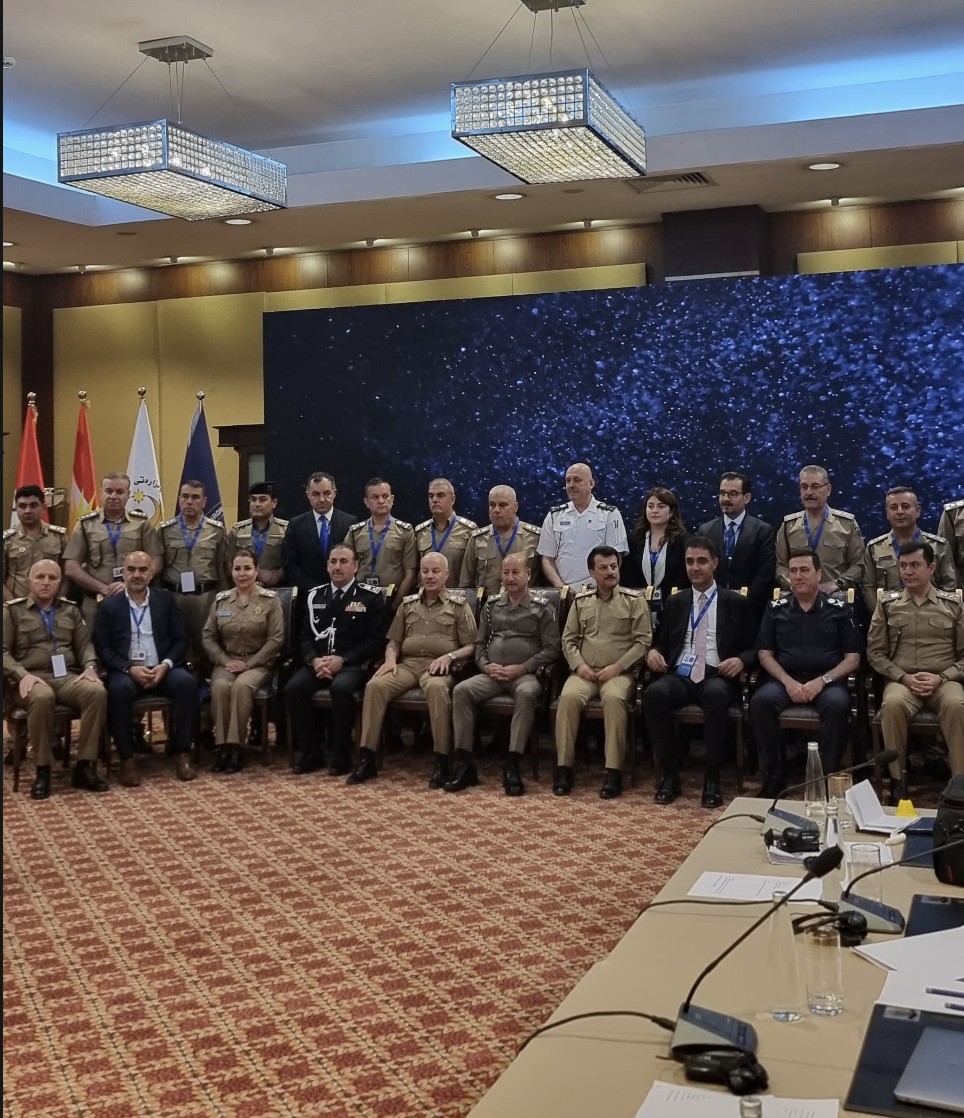
On Tuesday, senior police leaders in the Kurdistan Region wrapped up a three-day workshop on the implementation of the Kurdistan Police Reform Strategy 2026–2030, with support from the EU Advisory Mission in Iraq (EUAM Iraq).
The workshop brought together police leaders from Sulaymaniyah, Halabja, Erbil, and Duhok.
“I think you should see these three days of the conference as the first time that all the senior police leadership, together with the minister and the ministry, have sat down together to discuss reform and the plan for the coming years,” Saman Hassan, a Dutch police commissioner, who came from the Netherlands for the workshop, told Kurdistan Chronicle.
“We had previously identified 20 areas that need to be reformed, covering all the services under the ministry. The first and second days involved a lot of discussion and an exchange of knowledge from the Netherlands, the EU, and various other perspectives,” he said.
“On the third day, we gave them the opportunity to independently choose five priorities out of the 20, through discussion and presentations.
“With the help of our European colleagues, we will shape this process over the next five years,” Hassan added.
During the workshop, Kurdistan Regional Government Minister of Interior Reber Ahmed underlined that he wants to see action from the police officers and their leadership.
“You are a main part of managing this process,” he told the police leaders present at the workshop. “I have a lot of respect for your work, for your struggle, for your efforts, and for your intellect. We need to create this spirit of teamwork. The legal department and advisors should sit together. We need an assessment of the Ministry of Interior, but also of the citizens.
“We can do twice as much. Part of this is how we align ourselves with technology. We don’t need one person for everything; we can have two cameras replace ten people. There are systems that do not even exist in many European countries. We have to organize and adapt ourselves.”
EUAM Iraq Senior Strategic Advisor on Police Reform Jaring Kloosterman told Kurdistan Chronicle that this was the first time that all the senior leadership from across Kurdistan has gathered in one venue to discuss the way forward since the EUAM started its mission in 2017.
“They have created a strategic document for 2026–2030, with advice from EUAM Iraq. There are 20 priorities identified by the minister, the police, and the Leadership and Management Academy.
“The goal of today’s workshop was to select five of those 20 priorities as the main areas that the senior police leadership sees as the most important to work on,” he said.
“Those five points will now be summarized and presented to the minister. Then they will have to work on them during the first year and determine how these five priorities can be implemented.”
These priorities include the reform of curriculum for new police officers, digitalization and technology, the participation of women, and building more public trust.
“The police recognize that they have to adapt to the new society and to what is happening in the world. The police have to be flexible, so police training also needs to adapt to the kind of policing required in the modern world,” he added.
“Look at the digital world. Old traditions are going away, and it will be a faster-moving world. If you break it down, it is about the community, the internet, and the wider world. The police need to adapt from being very locally focused to dealing with the internet and with crime and criminality at a global level. They need to be flexible,” Kloosterman concluded.
“There need to be operational plans and a timeline. It has to be realistic. There will be one step forward and two steps back, but the end goal is clear: they want to have service-oriented policing.”
A seasoned reporter and analyst who specializes in Kurdish affairs.