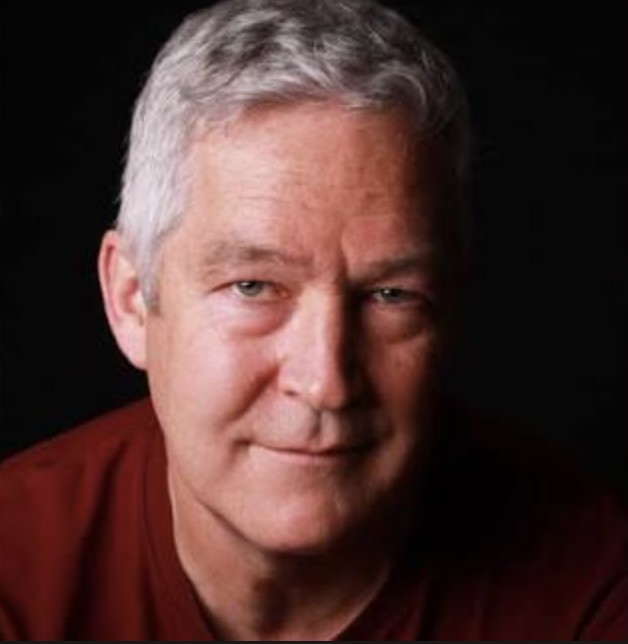
From the annals of British diplomacy in Erbil emerged a stage production that recounts a turning point in Kurdish history. Chris Bowers, who served as the UK’s Consul General in Erbil from 2010 to 2012, could hardly have imagined that the upheaval of 1991 in Kurdistan would one day draw him into the theater. Yet those events – the uprising, the exodus, and the images that shocked the world – became the foundation of his play, Safe Haven.
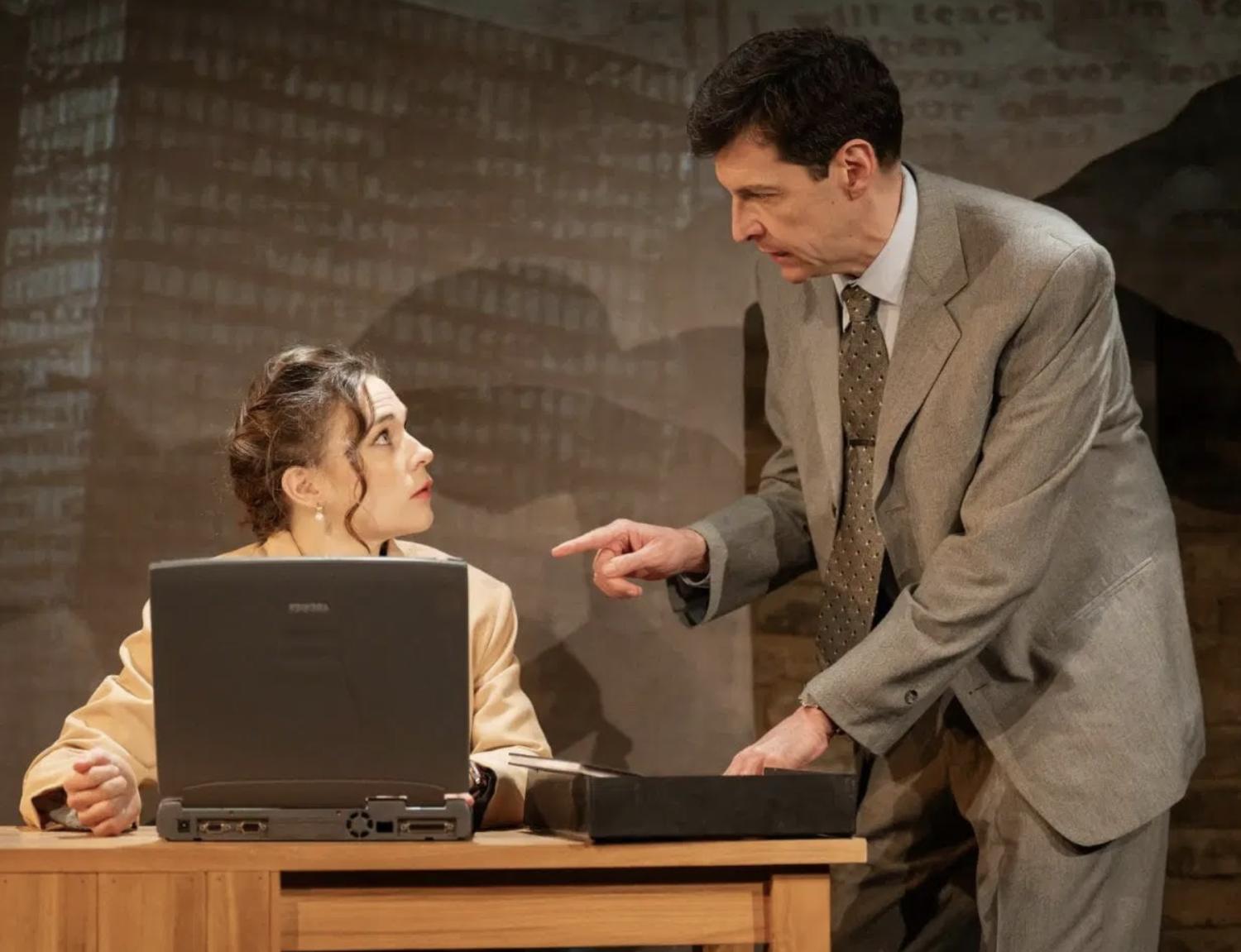
During the production’s premiere run in Britain, audiences filled the Arcola Theatre in London for six consecutive nights, with tickets completely sold out. British viewers sat alongside members of the Kurdish diaspora, watching a dramatized account of the spring of 1991, when hundreds of thousands of Kurds fled northern Iraq toward the Turkish and Iranian borders after the uprising and the violent reprisals ordered by Saddam Hussein.
The production quickly drew the attention of British media, with several outlets featuring the play prominently and framing it as a rare theatrical reckoning with Britain’s role in the creation of the Kurdish safe haven in 1991. Headlines emphasized both the humanitarian crisis that unfolded in the mountains and the diplomatic decisions that followed, positioning Safe Haven not merely as historical drama but as a meditation on foreign policy, responsibility, and memory.
A catastrophe that finds new life on stage
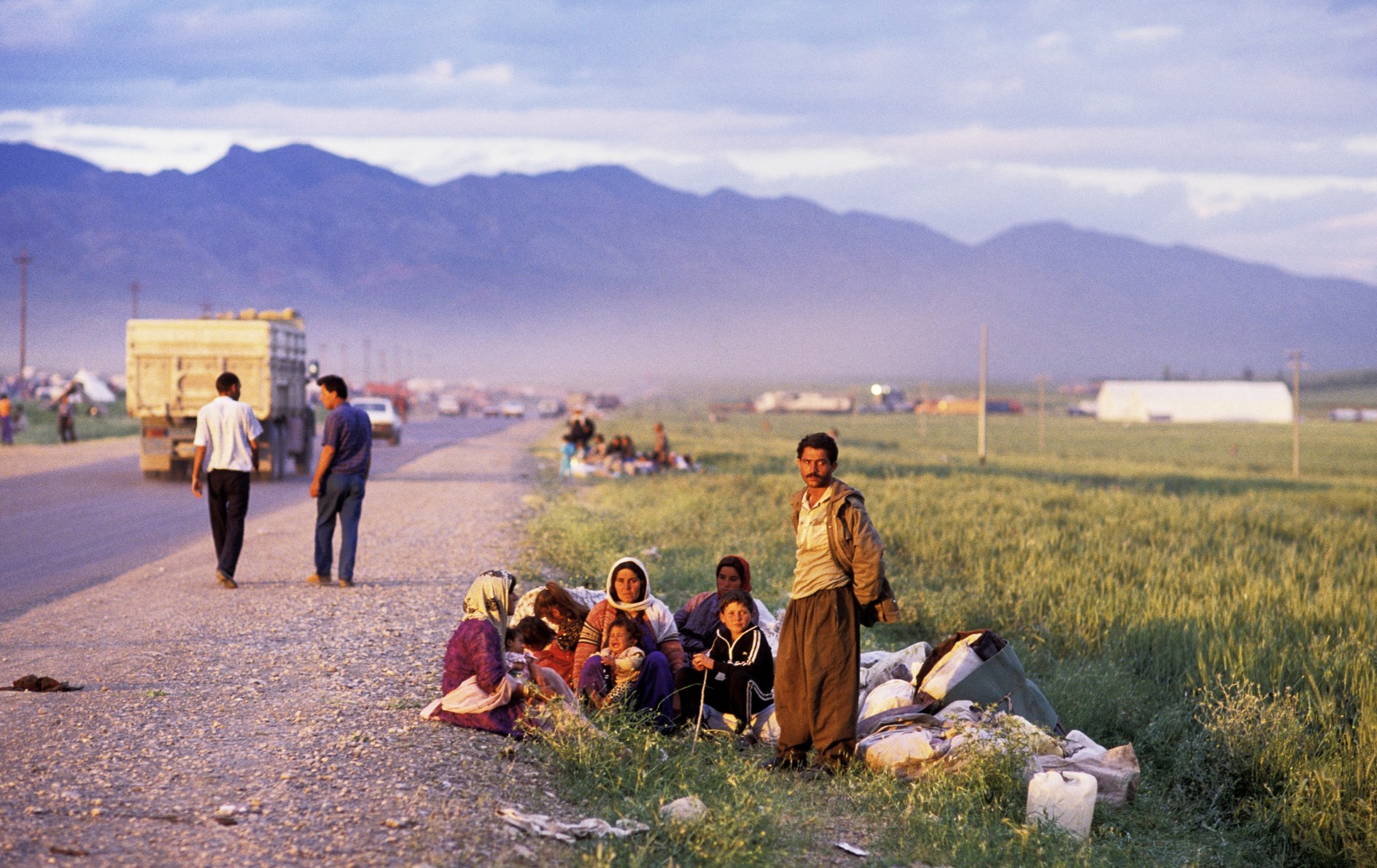
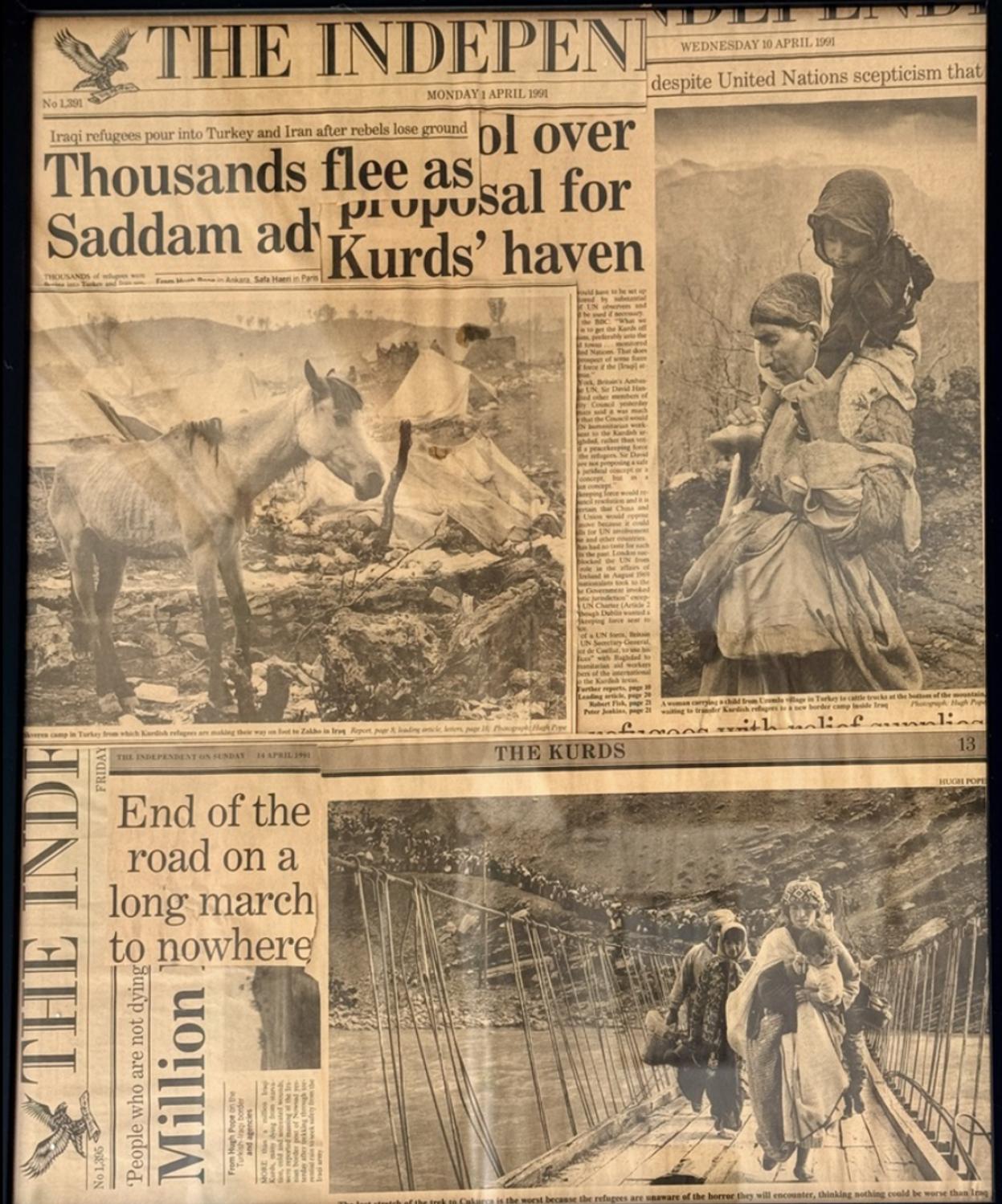
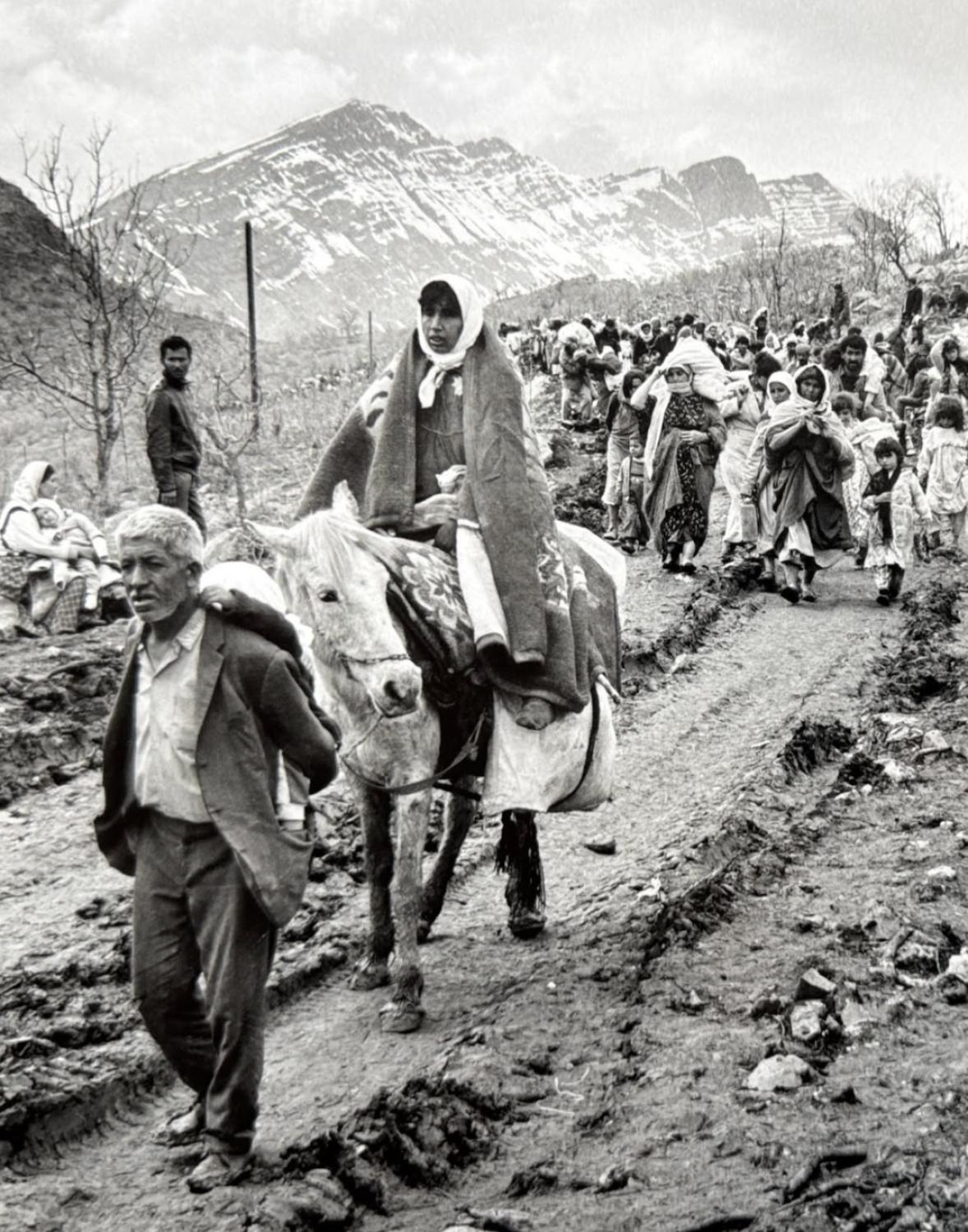
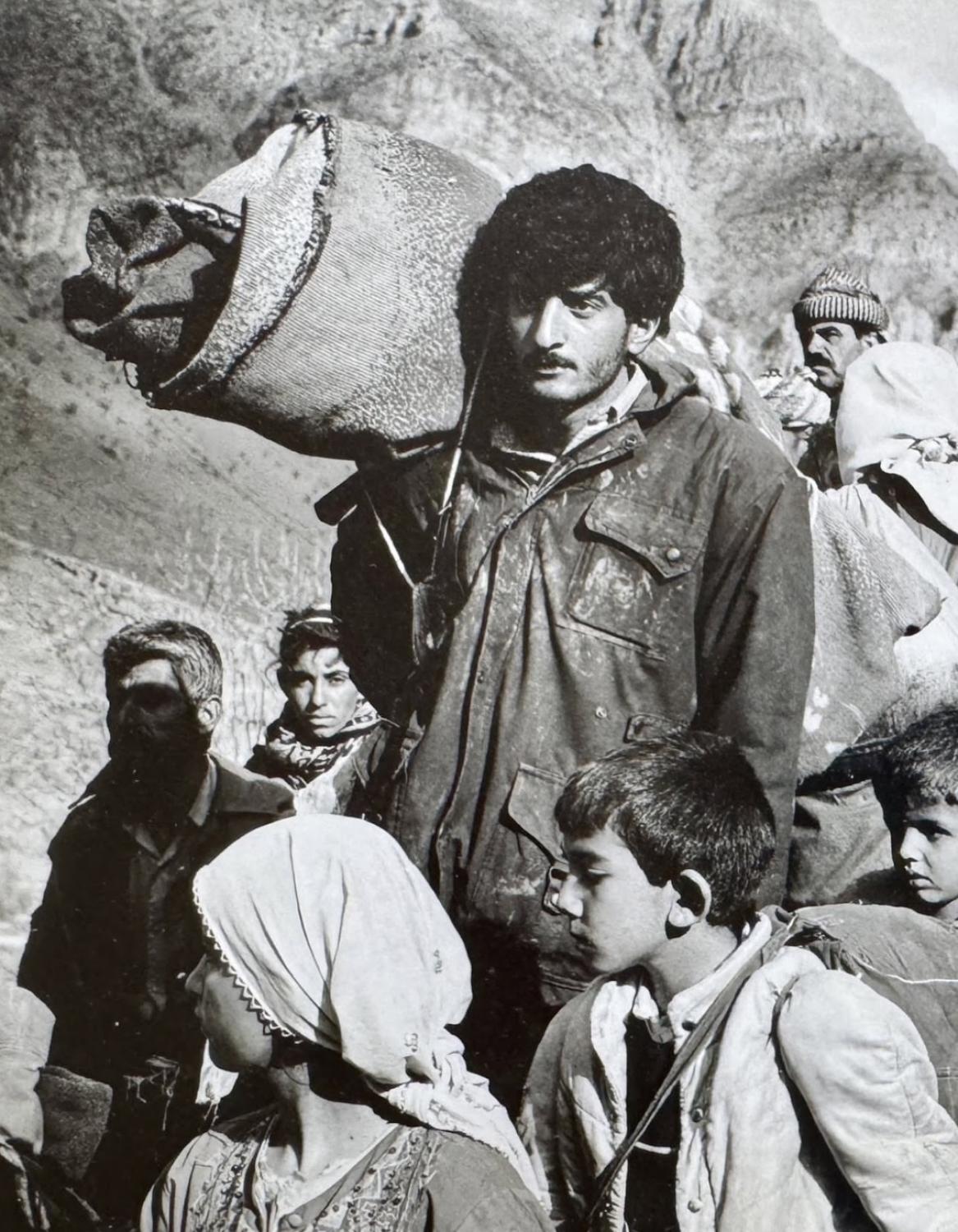
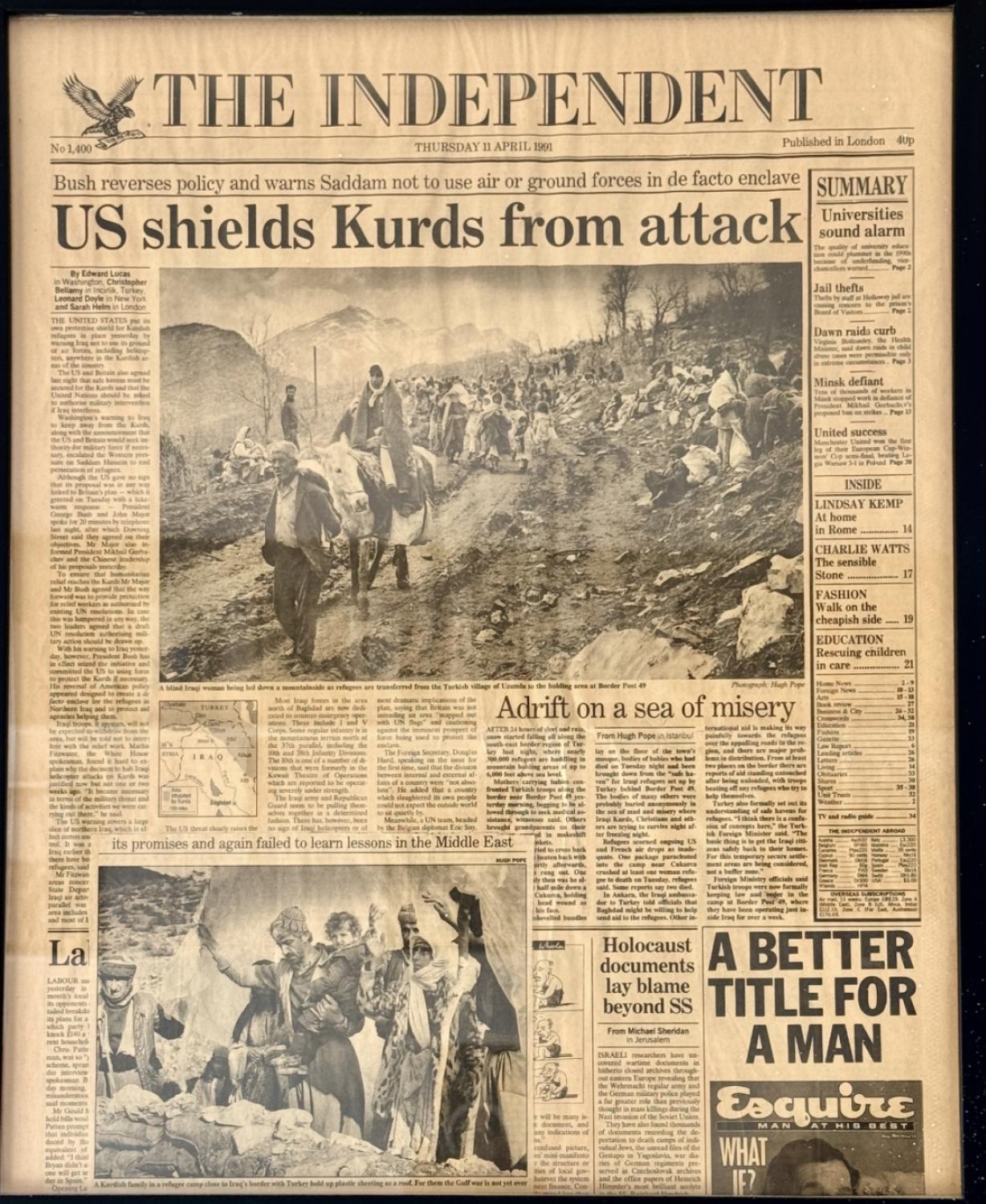
Among the earliest witnesses to that catastrophe was the journalist Hugh Pope, then reporting for The Independent. During the uprising, roughly 1,220 foreign journalists were reporting in the Kurdistan Region of Iraq, but most were forced to leave as communications collapsed. With an aviation strike in Turkey complicating access to the border, a small aircraft was chartered to carry journalists to Hakkari in Turkey. From there, taxis transported them to the frontier at Cukurca, where Kurdish families began descending from the mountains, exhausted and desperate for water.
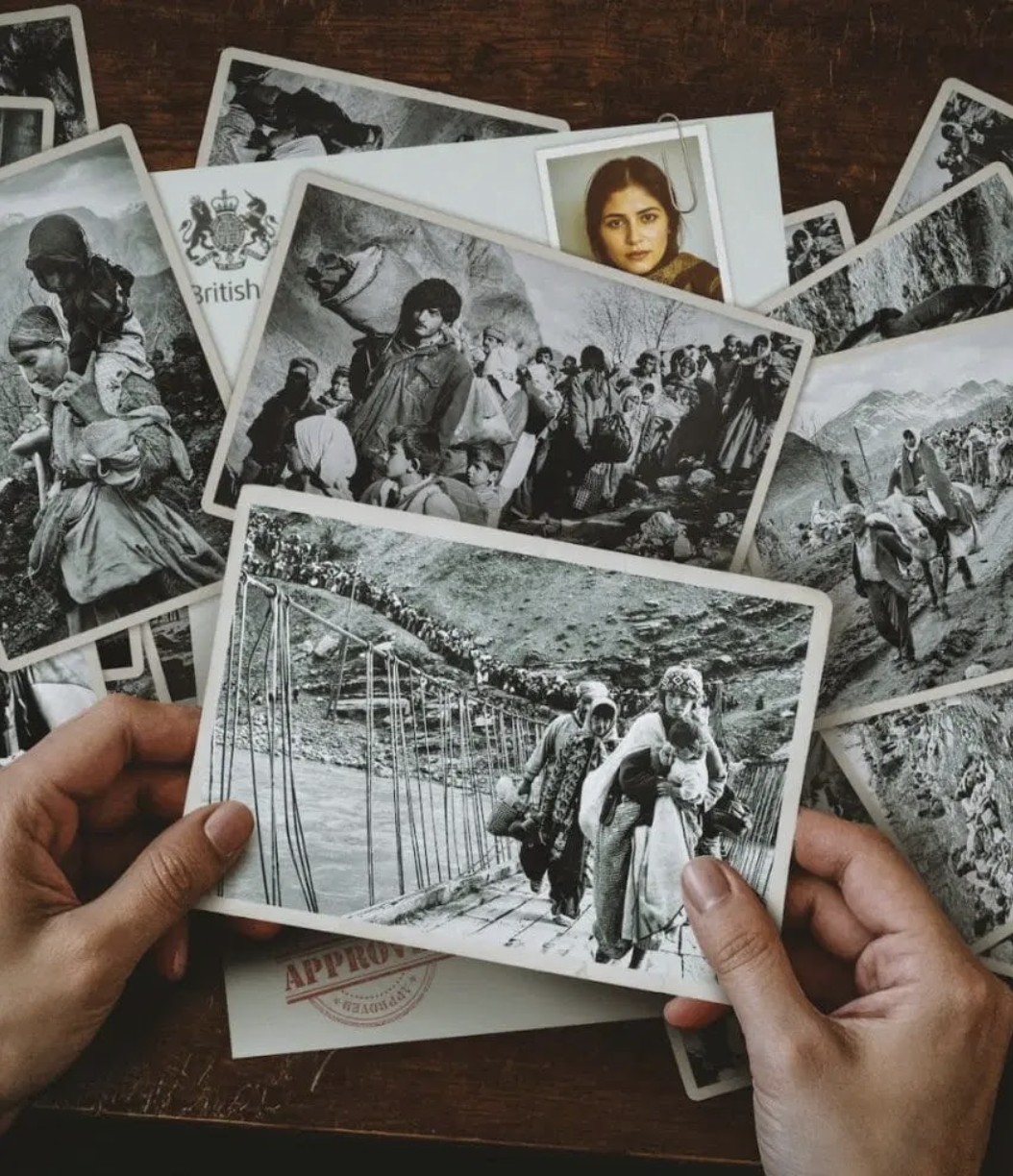
One photograph – a Kurdish woman carrying her infant child as she crossed into Turkey – became emblematic of that moment. Shot on black-and-white film and physically sent to London for processing, the image appeared on the front page in early April 1991. It was among the first visual confirmations of the scale of the humanitarian crisis and contributed to mounting public pressure for international intervention.
Watching Safe Haven 35 years later, Pope reflected on the experience as both journalist and spectator. The images that had once hung quietly on his study wall, he suggested, had suddenly found new life on stage.
In comments to Kurdistan Chronicle, Bowers described the events of 1991 not only as a tragedy, but also as a turning point. He framed the Kurdish story in three stages: the collective trauma of exile; the preservation of identity in the face of suffering; and the eventual emergence of a new political reality – the autonomous Kurdistan Region of Iraq, made possible after the establishment of a Western-backed no-fly zone. The UK, he noted, played a central role in creating the safe haven that allowed hundreds of thousands to return home.
Kurdistan Regional Government (KRG) High Representative to the UK Karwan Jamal Tahir said the idea for the play traces back to 2021, when the 30th anniversary of the Kurdish exodus was commemorated through an online event during the Covid-19 pandemic. He noted that the occasion was attended by KRG Prime Minister Masrour Barzani and by former UK Prime Minister Sir John Major, who had played a central role in the British initiative to establish the haven for the Kurds in 1991. Jamal Tahir also said he attended the performance five times over five days, explaining that each viewing left him deeply moved and compelled to watch it again, and that the theater was consistently full.
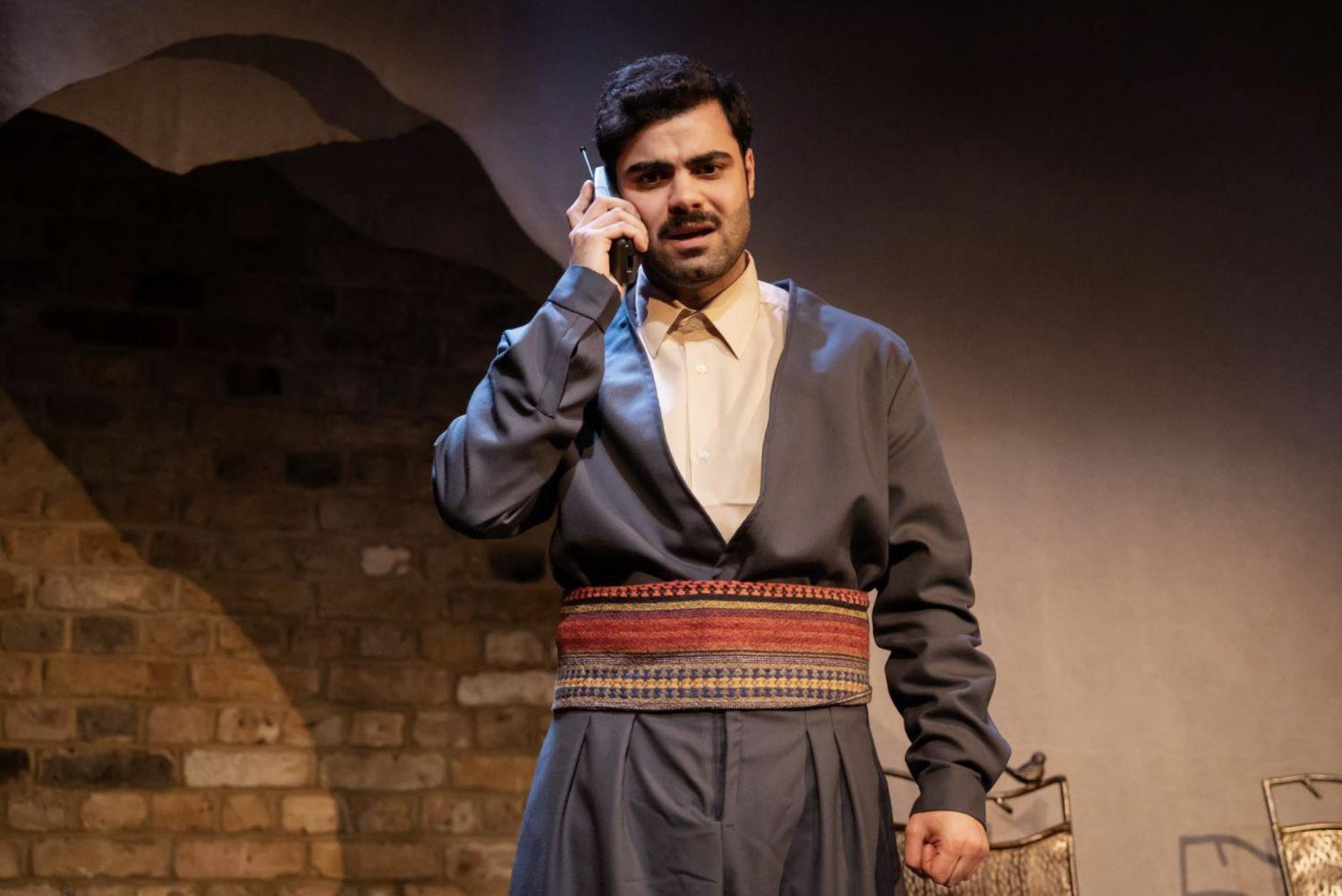
The production, however, does not unfold as a policy seminar. It is driven by characters. Actor Mazlum Gul performs two sharply contrasting roles. In one, he portrays Dlawer Ala’Aldeen, a Kurdish advocate pressing for British support in confronting Saddam’s regime. In the other, he embodies a Ba’ath Party loyalist whose authority sustains repression. The tension between those roles mirrors the moral and political fault lines of the period.
The continuing echoes of 1991
Others who spoke to Kurdistan Chronicle described the performance as more than an act of historical remembrance. Salahaddin Kurdi said the staging of Kurdish suffering before an international audience was essential – not only for educating outsiders, but for reminding younger Kurds of the price paid by their parents’ generation.
Serena Mohammad, a non-Kurdish attendee, acknowledged that she had known of the 1991 exodus only in abstract terms. Seeing it enacted, she said, transformed her understanding. Photographs convey evidence; theater, she emphasized, conveys proximity.
Safe Haven does not claim to resolve the past. Instead, it revisits a moment when diplomacy, journalism, and survival intersected in the mountains of Kurdistan and asks what remains of that intersection today. The story that once traveled from the Kurdistan Region to the front pages of British newspapers has now moved to the stage, where memory is not archived but performed, and where the echoes of 1991 continue to reverberate.
After its success in the UK, the play is expected to tour the Kurdistan Region in the coming months, where it will be staged before audiences that share the very memory the production brought to life on stage.
is the former UK Consul General in the Kurdistan Region and has been working on KRI for more than a decade.