Kurdistan.
The reach of your echoes reminds us of the responsibility to preserve the voices that shaped the path behind us. That history resonates from Lake Van to the rivers of Sirwan, Botan, and the Great Zab — waters that have carried both Kurdish memory and displacement.
Much is often said about the autonomous Kurdistan Region of Iraq and its growing diplomatic role as an anchor for Kurds and others in a turbulent region. Yet the Kurdish presence extends far beyond these borders. Their voices in various dialects resonate across Turkey, Iran, Syria, and Iraq, and echo through the almost-forgotten Red Kurdistan; they endure as well in the frontier lands of Armenia, Georgia, and Azerbaijan. The socialist character of Kurdish communities in the Caucasus was constrained under Soviet rule and fragmented in ways comparable to the experience of Kurds in the Kurdistan Region. Nevertheless, the cultural heritage, collective identity, ethnic continuity, and contributions of their artists reveal a proximity that is greater than often acknowledged.
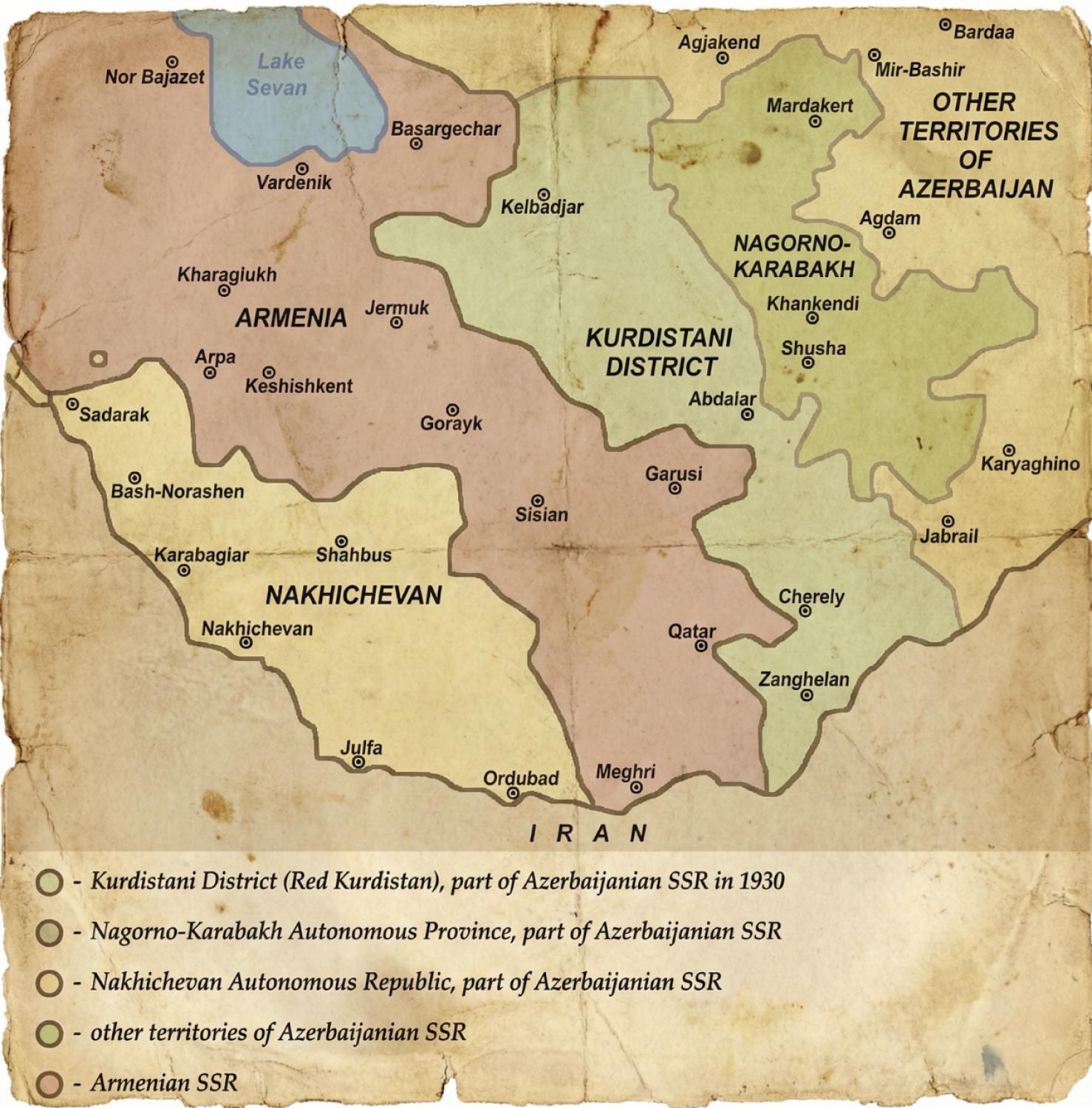
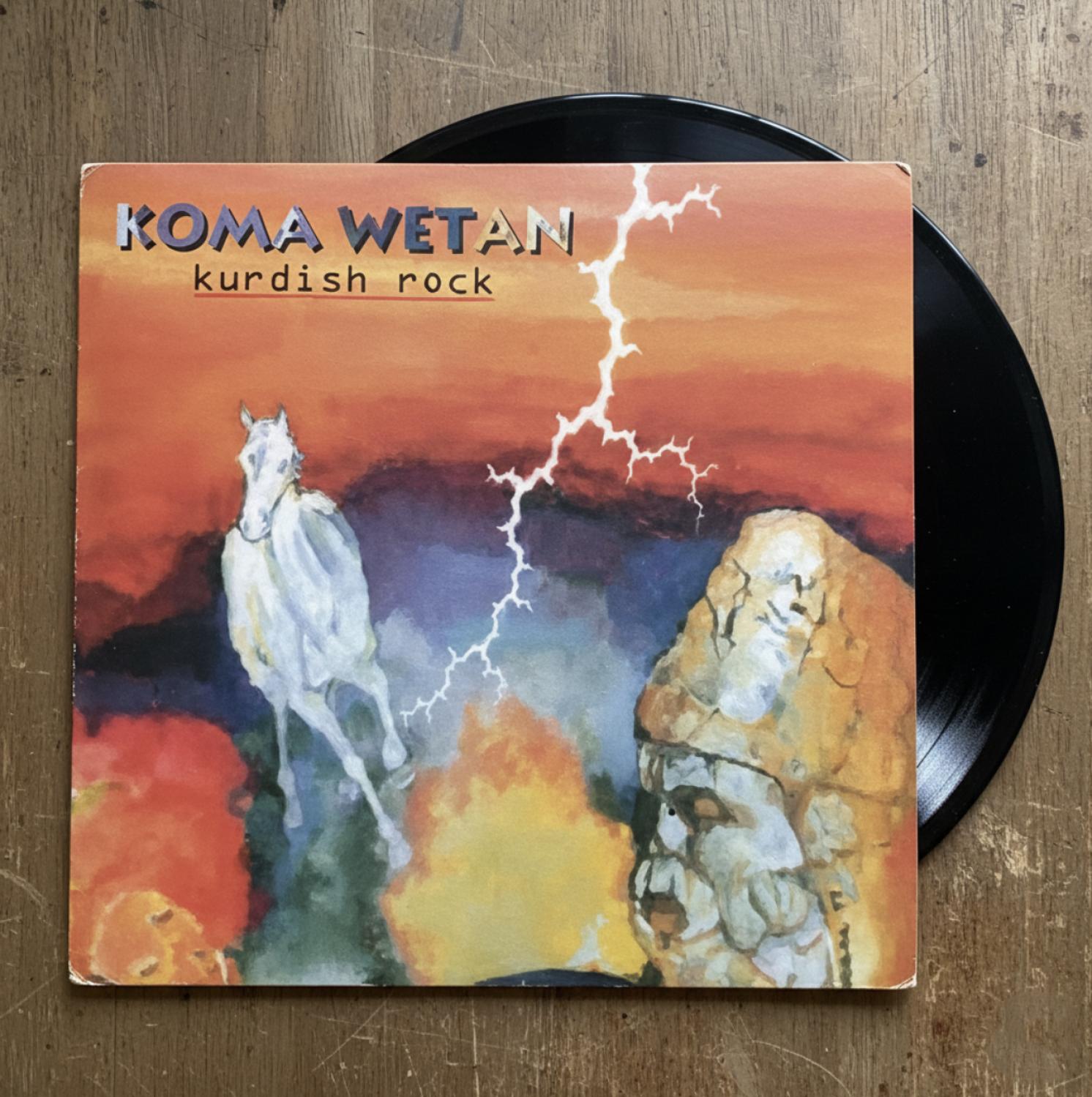
The Kurdish experience in the Caucasus during the Soviet era constitutes a frequently overlooked dimension of Kurdish history. Between 1923 and 1929, the Soviet Union established a short-lived autonomous Kurdish region in the Lachin corridor, known as Red Kurdistan. Archival records highlight significant cultural developments, such as the founding of the first Kurdish rock band Koma Wetan in 1973, and the preservation of Kurdish institutional memory, exemplified by collections maintained at the Nishtman Strategy Institute. This essay argues that Koma Wetan cannot be fully understood without Red Kurdistan, and that both reveal how Kurdish cultural resistance has often thrived most strongly outside formal state power.
Red Kurdistan: A Forgotten Chapter
The Soviet Union, like the Ottoman Empire, encompassed a vast array of national minorities and was never a truly homogeneous state. Yet just as the Ottoman Empire’s dissolution failed to produce a Kurdish nation-state, the collapse of the Soviet Union in the 1990s likewise did not lead to the creation of one.
Between 1923 and 1930, the Soviet Union created a short-lived Kurdish administrative unit in the Lachin corridor of Azerbaijan, known as Red Kurdistan. Although it never achieved real political autonomy, it represented one of the few moments in modern history when Kurds were officially recognized as a territorial nationality. From 1931 to 1936, renewed Soviet minority policies enabled limited Kurdish-language schooling and the publication of textbooks in 1934 and 1936.
Despite the establishment of Kurdistan Uezd (1923–1929) and its brief reorganization into Kurdistan Okrug (1929–1930), neither party directives nor the proclamation of Red Kurdistan translated into substantive gains for Kurdish autonomy. It was only after the Soviet Union launched a renewed wave of nationwide minority policies in 1930–1931 that any tangible, though still modest, progress began to materialize.
Kurdish Resistance Across Borders
During the 1970s, the Kurdish political movement, led by General Mustafa Barzani, was recovering from the failure of the 1970 Autonomy Agreement between the Iraqi government and the Kurdistan Democratic Party. In Turkey, Kurds faced systematic repression under the Turkish state, including bans on their language, culture, music, and political organizations. The Iranian Kurds were under central government control, with sporadic activism and localized uprisings. In 1973, most Syrian Kurds were denied citizenship and excluded from political representation, living under strict cultural repression that banned their language and Arabized their place names. Despite these constraints, Kurdish communities preserved their identity through folk music, storytelling, and clandestine political organizing. By 1973, Kurdish communities across the region were simultaneously facing repression and asserting their identity through cultural forms such as music and literature.
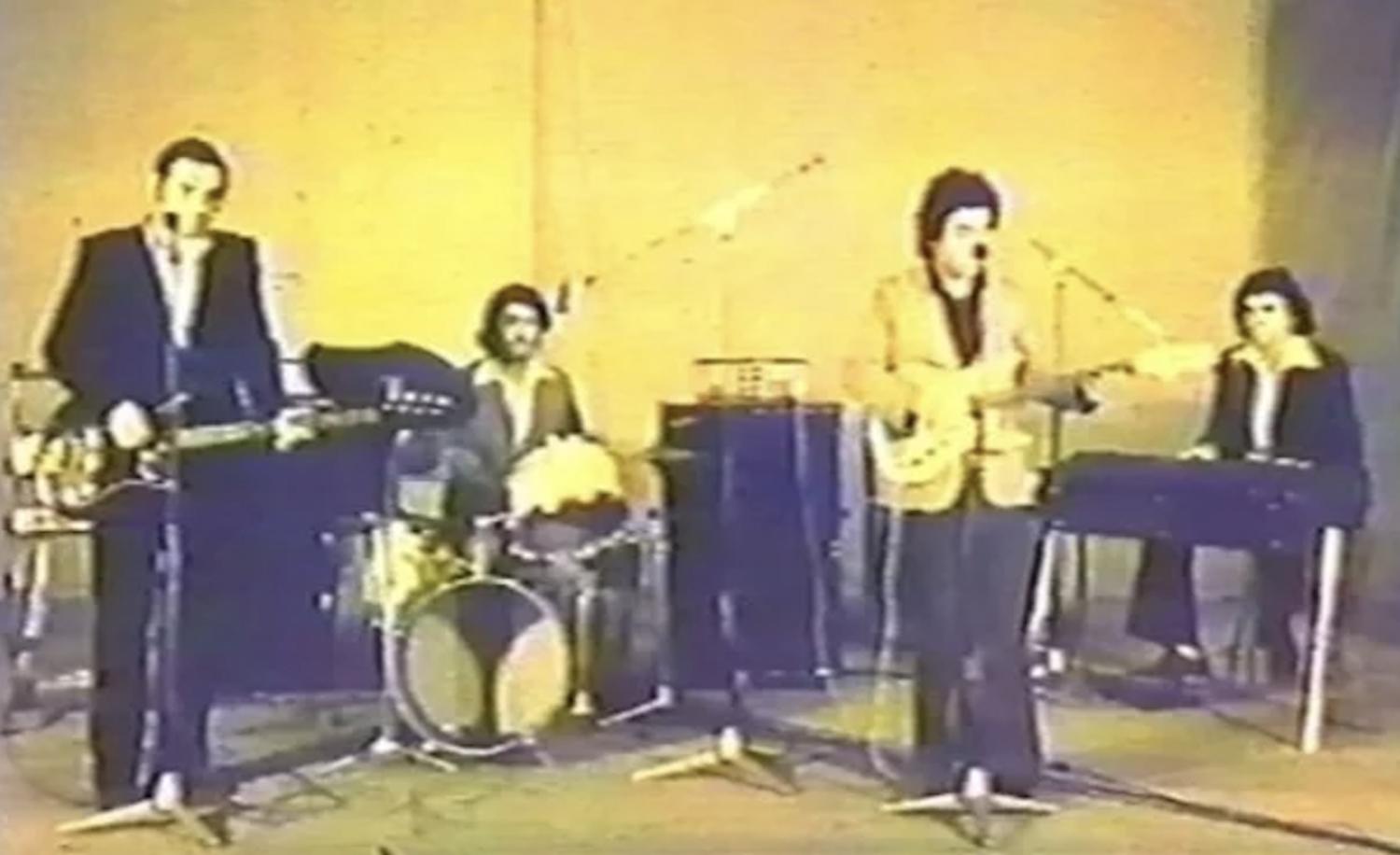
Resistance had endured through both music and historical continuity, playing a symbolic role in Kurdish cultural, political, and personal memory. While the band Koma Wetan is widely recognized as a symbol of Kurdish resistance in Turkey and modern-day Russia, its inspiration can be traced to Soviet influences and to Kurdish diasporic communities in the Caucasus, with roots in Soviet Georgia through radio broadcasts and rock festivals. Koma Wetan — meaning “Group of the East” in Kurdish — is a music ensemble renowned for its revolutionary and folkloric repertoire. Within Kurdish communities, the band came to occupy a role comparable to that of iconic rock groups in shaping youth culture elsewhere.
Birth of Koma Wetan
Amid political tensions and geographic divisions among Kurdish populations, musicians from the Caucasus and diaspora communities carried on Kurdish cultural memory. Influenced by Soviet folk orchestras, Marxist theories, and regional musical styles, Koma Wetan revived Kurdish folk traditions while transforming them into explicitly political protest music. Formed in 1973 in Tbilisi, Georgia, then part of the Soviet Union, the band featured three Kurds — Kerem Gerdenzeri, Rafael Samil Dasini, and Omer Recevi — as well as an Armenian, Levon Sahbazyan.
Their lyrical and linguistic expression could not have survived in Turkey or Syria. Public use of Kurdish in media, education, and broadcasting was effectively prohibited in Turkey until reforms in the early 1990s. Even today, the word “Kurdistan” is banned in the Turkish parliament. Expressions of Kurdish identity tied to statehood or national recognition continue to be suppressed. For example, as recently as 2017, Member of Parliament Osman Baydemir was reprimanded for referring to “Kurdistan” and was challenged on the very existence of such a place.
Yet, in 1980, under the multiethnic cultural policies of Tbilisi, Koma Wetan found state support and emerged as part of the center of the Soviet rock movement, even performing at the official state-sponsored rock festival. As Ozkan Oztas notes in his book Kurdish Art in the Soviet Union, “access to advanced equipment, combined with opportunities for mother-tongue language and musical education, made it possible for the first Kurdish rock music in history to emerge.”
Lyrics of Liberation
Koma Wetan’s music reflected themes of homeland and exile, anti-imperialism, and Kurdish unity. One of the founders and lead singers, Kerem Gerdenzeri, selected the band’s name to symbolize the Kurdish struggle for ethnic and cultural recognition. The group drew inspiration from renowned Kurdish poets, setting to music the works of Mikaile Resid, Karlene Cacani, Eliye Isko, Ordixane Celil, and Latifi Husret.
“Kurdistana min, Kurdistan hebi/Welate Kurdan, Kurdistan sen bi,” their lyrics echo in the song Welate Me, which translates to “My Kurdistan, there is a Kurdistan/ The land of the Kurds, may Kurdistan be prosperous.”
“My Kurdistan, there is a Kurdistan/The land of the Kurds, may Kurdistan be prosperous.” – “Our Country,” Koma Wetan.
Meanwhile, in their song Sine, they sing: “Birindarım ez mina teyre nav ezmane Kurdistane/Were Sine le, birindare xwe bibine heyra mine,” which translates to, “My wounds are like a bird in the sky of Kurdistan/Come, my Sine, see your wounded, my beloved.” This song can be interpreted as reflecting the wounded state of the Kurdish national identity, one that longs for care, tenderness, and a feminine touch.

Cultural Preservation Across Kurdistan
An ethnically marginalized group such as the Kurds sustains its identity through diverse forms, across different regions, and despite varying regimes. Red Kurdistan, a distinct entity, and the Kurdish-populated areas of Iraq, Turkey, Syria, and Iran have each followed different political paths. Nonetheless, the preservation of Kurdish culture through music, art, theater, poetry, film, and other expressions of national memory remains central, particularly within the Kurdistan Region of Iraq — the only Kurdish region to achieve political autonomy successfully, thus far. The Kurdistan Region serves as a cornerstone for honoring our fellow Kurds, acknowledging their struggles, and recognizing the unique forms of activism they have developed, vividly expressed through Koma Wetan’s distinctive narrative.
Kurdish musical and cultural preservation are notable across Greater Kurdistan. In Southern Kurdistan (Kurdistan Region of Iraq), Homer Dizeyee, Chopy Fatah, and Hesen Zirek are central to traditional and classical Kurdish music. In Northern Kurdistan (southeastern Turkey), Shakiro, Beytocan, Meryem Xan, Aynur Dogan, and Ahmet Kaya kept Kurdish music alive under repression by blending political messages in their mother tongue. In Eastern Kurdistan (northwestern Iran), Hani Mojtahedy, Nasser Razazi, and Shahram Nazeri fused Kurdish music with classical Sufi traditions. In Western Kurdistan (northeastern Syria), Xero Abbas and Ciwan Haco combine Kurdish music with rock, blues, jazz, and pop, creating a modern, internationally recognized sound. In the diaspora, Zara, Tara Jaff, Ahmet Aslan, Sivan Perwer, and others continue to preserve and celebrate Kurdish identity and the spirit of liberation through music in exile and in their motherland.
Legacy Today
Koma Wetan’s legacy endures in the hearts of Kurds across generations. Though artists like Sivan Perwer have long used music to call for justice, Koma Wetan’s songs continue to inspire and connect the past with the present. In 2017, during the reality singing competition Kurd Idol, Cengiz Yazgi revived their iconic track “Venagere,” paying tribute to the first Kurdish rock band. Today, their music stands not only as a symbol of cultural resilience and endurance, but as a timeless echo of a people whose spirit refuses to be silenced.
From the forgotten experiment of Red Kurdistan to the enduring songs of Koma Wetan, Kurdish culture has repeatedly flourished in exile, proving that political borders have never been able to contain its creative spirit.
An International Affairs specialist with a Master’s degree from American University in Washington, D.C.